
How to Find Reliable Used Electrical Components for Modern Vehicles
How to Find Reliable Used Electrical Components for Modern Vehicles
Modern vehicles are marvels of engineering, relying heavily on complex electrical systems to control everything from fuel injection and advanced driver-assistance systems (ADAS) to infotainment and climate control. When these systems fail, the repair bills can be staggering if you rely solely on brand-new dealership components. For drivers, DIY enthusiasts, and independent mechanics in Wilmington, Delaware, Washington, D.C., Cherry Hill, New Jersey, and Newark, Delaware, finding high-quality used auto parts is the smartest way to keep modern cars on the road without breaking the bank.
Welcome to JP Auto Hub, your premier destination for top-tier recycled automotive components. In this comprehensive guide, we will explore how to identify, source, and verify reliable used electrical components, and why choosing OEM (Original Equipment Manufacturer) parts is always superior to rolling the dice on cheap aftermarket alternatives.
The Growing Complexity of Modern Car Electronics
In the past, a vehicle’s electrical system consisted of a battery, an alternator, a starter, and basic wiring for lights and the radio. Today, a standard modern vehicle contains up to 80 different Electronic Control Units (ECUs) communicating over a Controller Area Network (CAN) bus. These modules control the engine, transmission, airbags, anti-lock brakes, and body functions.
Because these systems are so heavily integrated, a failure in one electrical component can trigger cascading issues. Replacing these complex modules requires parts that feature the exact same voltage tolerances, firmware compatibility, and pin-out configurations as the original factory unit. This makes the sourcing of your replacement parts a critical step in the repair process.
Why Used OEM Parts Defeat Cheap Aftermarket Alternatives
When an electrical component fails, a quick online search will often yield ultra-cheap aftermarket replacements manufactured overseas. While the price tag is tempting, installing these cut-rate electronics in a modern vehicle is a recipe for disaster. Here is why sourcing OEM parts from a trusted recycler like JP Auto Hub is the best route:
Guaranteed Fit and Compatibility
OEM parts were designed by the vehicle’s manufacturer specifically for your make and model. Cheap aftermarket electrical parts often use generic circuit boards and sub-par soldering that fail to communicate properly with your car’s CAN bus system. This leads to persistent check engine lights, phantom electrical drains, or immediate component failure.
Superior Build Quality and Longevity
Automakers spend millions on research and development to ensure their electronics can withstand extreme engine bay temperatures, heavy vibrations, and moisture. Aftermarket manufacturers routinely cut corners by using thinner gauge wiring and cheaper microchips. A used OEM part has already proven it can survive real-world conditions.
The Eco-Friendly Advantage
Choosing recycled car parts is a massively beneficial choice for the environment. By reusing existing electrical components, you are reducing the demand for new raw materials like copper, silicon, and plastics, while simultaneously keeping perfectly good modules out of landfills.
OEM vs. Aftermarket: A Quick Comparison
| Feature | Used OEM Parts (JP Auto Hub) | Cheap Aftermarket Parts |
|---|---|---|
| Compatibility | Exact match; plug-and-play or easily programmed. | Often requires splicing; high risk of software rejection. |
| Material Quality | Automotive-grade wiring, robust weather sealing. | Thin wiring, poor solder joints, weak plastic housings. |
| Cost | Highly affordable compared to new dealer parts. | Cheap upfront, but costly when they fail prematurely. |
| Reliability | Tested and verified by salvage professionals. | Unpredictable lifespan; high defect rate out of the box. |
Top Electrical Components You Can Safely Buy Used
Not all used auto parts are created equal, but many electrical components are incredibly robust and make excellent candidates for recycled purchasing. Here are the top electrical parts you should source used:
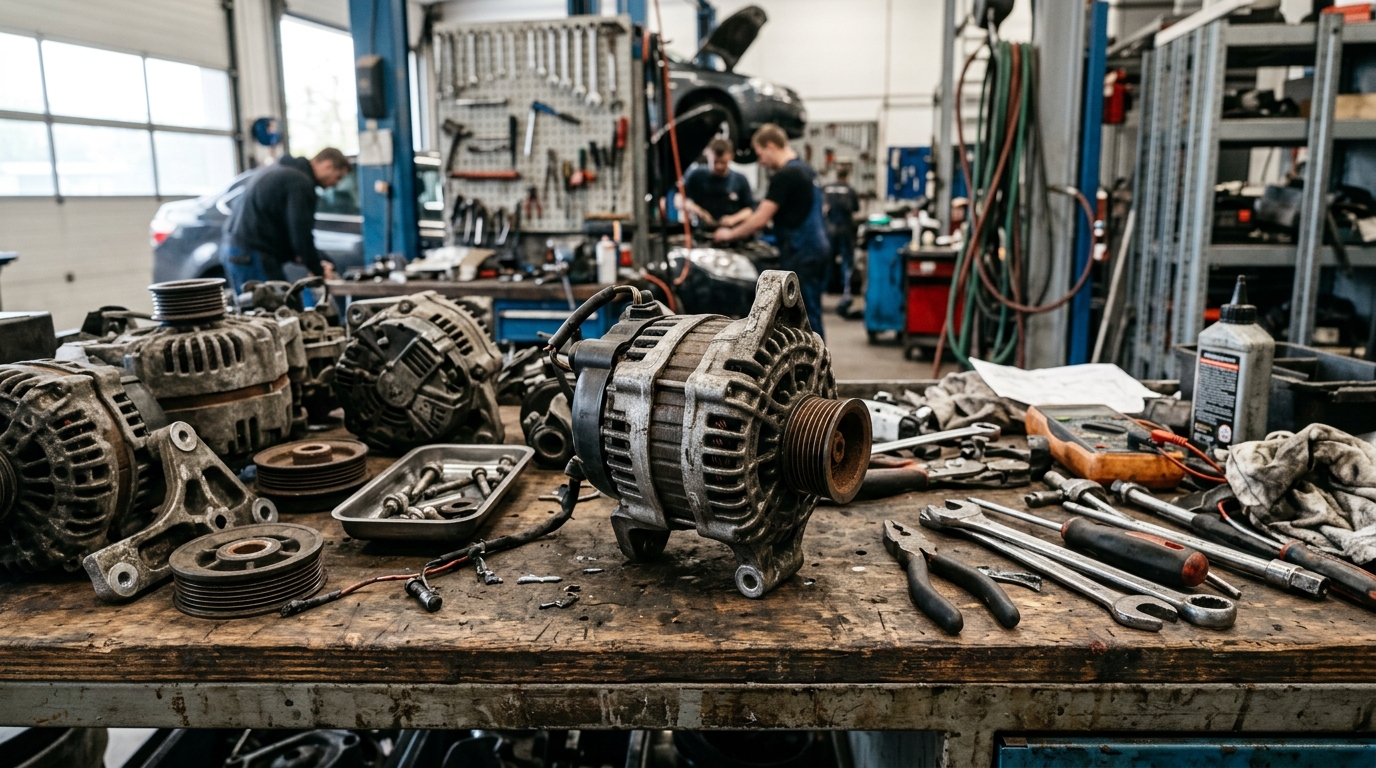
- Alternators and Starters: These heavy-duty components are built to last. Buying a low-mileage used OEM alternator is vastly superior to buying a “remanufactured” aftermarket unit with cheap replacement brushes.
- Electronic Control Units (ECUs): Engine computers rarely fail mechanically; they are usually damaged by external shorts or water. A used ECU with matching part numbers can be easily reprogrammed to your vehicle.
- Infotainment Displays and Radios: Dealerships charge thousands for replacement touchscreens. Used OEM infotainment systems are a plug-and-play solution that saves massive amounts of money.
- Window Motors and Switches: These interior components are protected from the elements and generally have long lifespans, making them ideal recycled car parts.
used car alternator workbench
How to Verify the Reliability of Used Electrical Parts
When shopping for used auto parts, especially electronics, due diligence is key. At JP Auto Hub, we take the guesswork out of the equation, but it is always good practice to know what to look for:
1. Match the Part Numbers Exactly
Electrical components are highly specific. A part from a 2018 model might look identical to a 2019 model, but the internal firmware could be different. Always locate the manufacturer’s sticker on your broken part and match the alphanumeric code exactly.
2. Inspect for Water Damage and Corrosion
Water is the enemy of electronics. Inspect the connector pins. They should be bright and clean. If you see green or white powdery corrosion on the pins, or water lines on the module’s casing, the part may be compromised.
3. Check for Burnt Odors or Melted Plastic
Give the part a quick sniff test. A burnt, acrid smell is a dead giveaway that the internal circuit board has suffered a short circuit. Similarly, check the plastic housing around the connector pins for any signs of melting or warping due to excessive heat.
📹 Recommended Video
For a visual guide, search “how to test car electrical components” on
YouTube.
Serving the Mid-Atlantic: Wilmington, Washington D.C., Cherry Hill, and Newark
Finding a local, reliable source for used auto parts can be challenging. JP Auto Hub is proud to serve a wide network of automotive professionals and everyday drivers across the Mid-Atlantic region.
- Wilmington, Delaware: Fast access to premium OEM parts for local repair shops and DIYers looking to bypass dealership markups.
- Washington, D.C.: Navigating city traffic puts heavy wear on alternators and starters. We provide the capital region with robust, tested electrical components.
- Cherry Hill, New Jersey: Whether dealing with harsh winter weather electrical gremlins or routine maintenance, our New Jersey customers rely on our verified inventory.
- Newark, Delaware: Home to busy commuters and university students who need cost-effective, reliable repairs to stay on schedule.
No matter where you are located in these areas, JP Auto Hub ensures that high-quality recycled car parts are just a few clicks away, complete with accurate descriptions and fast shipping.
Trust JP Auto Hub for Your Electrical Part Needs
Repairing modern vehicle electronics doesn’t have to drain your wallet. By understanding the importance of OEM parts and knowing how to identify quality components, you can perform reliable repairs that stand the test of time. Avoiding cheap aftermarket electronics not only saves you from frustrating re-repairs but also ensures your vehicle operates exactly as the manufacturer intended.
Ready to find the perfect electrical component for your vehicle? Browse our shop today to search our extensive inventory of tested, high-quality used OEM parts. If you need help finding a specific module or matching a complex part number, don’t hesitate to contact us. Our team of automotive experts is standing by to help you get your car back on the road safely and affordably.





Copyright 2025 © J&P All right reserved. Powered by IzyoX
