
Preparing Your Vehicle for a Cross-Country Trip from the East Coast
Preparing Your Vehicle for a Cross-Country Trip from the East Coast
Embarking on a cross-country road trip from the East Coast is a quintessential American experience. Whether you are departing from the historic maritime streets of Annapolis, Maryland, the bustling urban center of Baltimore, Maryland, or the busy I-95 corridors of Wilmington and Newark, Delaware, the journey west demands profound mechanical readiness. A 3,000-mile transit will expose your vehicle to extreme temperature fluctuations, varying altitudes, and grueling continuous operating hours. To survive this without catastrophic failure, standard maintenance is not enough; a deep, technical pre-trip inspection is required.
The Rigors of Cross-Country Travel on Automotive Systems
Driving from the Mid-Atlantic to the Pacific Coast subjects a vehicle to distinct thermal and kinetic stresses. The transition from the humid, sea-level air of Delaware and Maryland to the high-altitude, oxygen-deprived environment of the Rocky Mountains forces your engine’s Engine Control Unit (ECU) to constantly adjust air-fuel ratios. Furthermore, the sustained high-RPM operation across the Great Plains generates immense heat, degrading fluids and stressing rotating assemblies.
Powertrain and Drivetrain Health
Before leaving cities like Baltimore or Newark, your powertrain requires a comprehensive audit. Check the transmission fluid not just for level, but for viscosity and particulate contamination. A burnt smell indicates degraded friction modifiers, which can lead to clutch pack slippage on steep mountain grades. Inspect all serpentine belts for micro-cracking and check the tensioner pulley bearings for play. A seized tensioner at 75 MPH will instantly strip a belt, disabling your alternator, water pump, and power steering.
Cooling System Integrity
Your cooling system is your primary defense against catastrophic engine failure. Inspect the radiator for bent fins or micro-leaks at the plastic end tanks—a common failure point in modern vehicles. Ensure the water pump weep hole is dry; any moisture here is a precursor to bearing failure. The thermostat should be tested for proper opening temperature, and the coolant must be flushed if it has lost its anti-corrosive properties.
Braking System and Suspension Dynamics
Your vehicle’s braking and suspension systems will be pushed to their limits, particularly when navigating the steep, prolonged descents of the Appalachian and Rocky Mountains. Inspect brake pads for even wear and ensure there is at least 5mm of friction material remaining. Rotors must be checked for lateral runout and thickness; warped rotors will cause severe steering wheel vibration under heavy braking, leading to diminished stopping power and increased stopping distances. Furthermore, brake fluid is hygroscopic, meaning it absorbs moisture over time. If your brake fluid is older than two years, a complete flush is mandatory. Moisture in the fluid dramatically lowers its boiling point, which can lead to a terrifying phenomenon known as brake fade—where the fluid boils, introduces air into the lines, and causes a complete loss of hydraulic pressure. On the suspension front, inspect the MacPherson struts or shock absorbers for fluid leaks. A blown strut will cause erratic handling and dangerous body roll at highway speeds. Check the sway bar end links and control arm bushings; any clunking noises over bumps in Newark or Baltimore city traffic will only amplify into severe handling instability at 80 MPH on the interstate.
Why Used OEM Parts Beat Cheap Aftermarket Alternatives
When replacing failing components before a massive trip, vehicle owners face a critical choice: buy cheap, brand-new aftermarket parts, or invest in genuine OEM parts. As automotive experts, we categorically advise against the former. Here is the technical breakdown of why sourcing recycled car parts from a trusted supplier like JP Auto Hub is the superior choice.
Metallurgy and Material Science
Original Equipment Manufacturer (OEM) parts are engineered with strict metallurgical standards. An OEM control arm or tie rod is forged to withstand specific shear and tensile stresses calculated by the automaker. Cheap aftermarket suspension components often use inferior steel alloys and lower-grade rubber bushings, which degrade rapidly under the sustained kinetic load of a cross-country trip. A pothole in the Midwest can easily snap a brittle aftermarket ball joint, whereas an OEM component is designed to absorb the impact.
Electronic Calibration and Sensor Accuracy
Modern vehicles rely heavily on a network of sensors (Mass Airflow, Oxygen, Crankshaft Position). Cheap aftermarket sensors frequently suffer from poor calibration and inferior soldering. They may send erratic voltage signals to the ECU, resulting in poor fuel economy, misfires, or a vehicle stuck in “limp mode” in the middle of the desert. Sourcing used auto parts that carry the genuine OEM stamp ensures that the sensor’s impedance and signal output perfectly match your vehicle’s factory specifications.
The JP Auto Hub Advantage
By choosing JP Auto Hub, you are securing components that were originally designed for your exact make and model. Our rigorous inspection process ensures that the recycled car parts you receive have plenty of life left, offering factory-level reliability at a fraction of the cost of new dealership parts. When you are 1,500 miles away from home, you want the peace of mind that comes with genuine factory engineering.

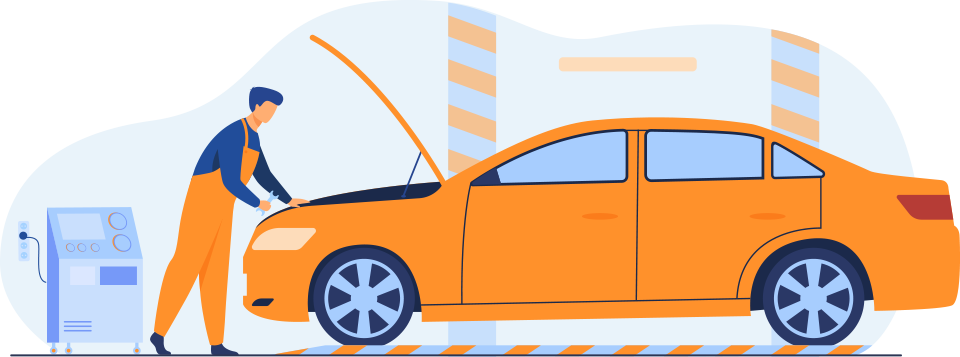
mechanic inspecting car engine
High-Failure Components to Replace Before You Leave
If your vehicle has over 80,000 miles and you are departing from the Mid-Atlantic region, consider preemptively replacing the following components. Waiting for them to fail on the road will result in exorbitant towing fees and stranded days.
| Component | Signs of Impending Failure | Replacement Priority |
|---|---|---|
| Alternator | Flickering headlights, whining bearing noise, voltage drops below 13.5V under load. | High |
| Fuel Pump | Long cranking times, intermittent hesitation under heavy acceleration, whining from the fuel tank. | High |
| Starter Motor | Clicking sound when turning the key, slow engine cranking, intermittent starting when hot. | Medium |
| Ignition Coils | Rough idle, engine misfire codes (P0300 series), decreased fuel efficiency. | Medium |
Sourcing Your Parts Locally in the Mid-Atlantic
Preparation is key, and having a reliable local partner makes all the difference. Whether you are wrenching in a garage in Annapolis, Maryland, or managing a fleet in Wilmington, Delaware, securing the right components quickly is essential. At JP Auto Hub, we provide East Coast drivers with an extensive inventory of fully tested, high-quality OEM components.
Instead of gambling on unbranded internet specials, you can shop for used auto parts directly through our intuitive online portal. We categorize our inventory meticulously, ensuring you find the exact match for your vehicle’s VIN. If you have specific technical questions about cross-compatibility or need assistance sourcing a rare module for your cross-country build, do not hesitate to contact our team of automotive specialists.
📹 Recommended Video
For a visual guide, search “comprehensive road trip car inspection checklist” on
YouTube.
Building the Ultimate Emergency Road Trip Kit
Even with meticulous preparation and the installation of high-quality recycled car parts, the unpredictable nature of a 3,000-mile journey requires a robust emergency kit. Do not leave the East Coast without packing the following technical essentials:
- OBD-II Diagnostic Scanner: A vital tool for reading engine codes on the fly. If your check engine light illuminates in rural Nebraska, knowing whether it is a loose gas cap or a failing catalytic converter is crucial.
- Portable Jump Starter & Air Compressor: Modern lithium-ion jump packs can start a V8 engine multiple times on a single charge and often include a built-in compressor to handle slow tire leaks.
- Spare OEM Relays and Fuses: Bring spare relays for the fuel pump and starter. Electrical anomalies can happen, and having the exact OEM relay can save you from a costly tow.
- Full-Size Spare Tire: Space-saver “donut” tires are limited to 50 MPH and 50 miles of range. A cross-country trip necessitates a full-size spare, especially when traveling through remote areas of the American West.
- Essential Hand Tools: Pack a comprehensive metric and SAE socket set, breaker bar, torque wrench, pliers, zip ties, and heavy-duty duct tape for emergency roadside macgyvering.
Conclusion: Start Your Journey with Confidence
A cross-country trip from Baltimore, Wilmington, Newark, or Annapolis is a massive undertaking for any vehicle. By performing a rigorous technical inspection, understanding the critical differences between cheap aftermarket components and genuine OEM parts, and preemptively replacing high-wear items, you drastically reduce the risk of mechanical breakdown. Trust in the engineering of original factory components, and let JP Auto Hub supply the reliable, recycled auto parts you need to conquer the open road. Safe travels, and enjoy the drive.





Copyright 2025 © J&P All right reserved. Powered by IzyoX
