
Why Local Drivers Choose OEM Used Parts for Better Fitment
Why Local Drivers Choose OEM Used Parts for Better Fitment
For motorists navigating the bustling urban corridors of Philadelphia, Pennsylvania, the coastal stretches of Annapolis, Maryland, the historic roadways of Dover, Delaware, and the suburban networks of Cherry Hill, New Jersey, vehicle reliability is an absolute necessity. When a vehicle requires repairs, the choice of replacement components dictates not only the immediate success of the repair but also the long-term safety and performance of the car. Increasingly, informed vehicle owners and professional technicians are turning to JP Auto Hub to source premium components. The prevailing consensus in the automotive repair industry is clear: when it comes to guaranteeing exact fitment and restoring original factory specifications, nothing beats high-quality OEM parts.
The Science of Fitment: OEM vs. Aftermarket
To understand why local drivers prefer OEM (Original Equipment Manufacturer) components, we must first examine the engineering tolerances involved in automotive manufacturing. Modern vehicles are assembled with microscopic precision. Every bolt hole, sensor mount, and aerodynamic curve is calculated to perform under extreme stress. OEM parts are the exact components engineered by the vehicle’s manufacturer, designed to integrate seamlessly into the vehicle’s complex ecosystem.
In contrast, aftermarket parts are often reverse-engineered by third-party companies. Because these manufacturers do not have access to the original CAD (Computer-Aided Design) files, they rely on 3D scanning and physical measurements, which inherently introduces a margin of error. This phenomenon, known as “tolerance stacking,” means that even a deviation of a few millimeters can result in misaligned body panels, rattling suspension components, or failing electronic sensors.
Comparative Analysis: OEM vs. Aftermarket Quality
| Feature | OEM Used Parts | Cheap Aftermarket Parts |
|---|---|---|
| Fitment Tolerance | Exact factory specifications; guaranteed plug-and-play installation. | Variable; often requires modification, drilling, or forced alignment. |
| Material Quality | High-grade factory alloys, advanced polymers, and galvanized steel. | Inferior metals, thinner plastics, and lack of anti-corrosion coating. |
| Crash Safety Compliance | Tested and verified to meet federal crumple zone standards. | Rarely crash-tested; may compromise vehicle structural integrity. |
| Electronic Compatibility | Seamless CAN bus communication with the vehicle’s ECU. | High risk of triggering dashboard warning lights and sensor faults. |
The Economic and Technical Advantages of Recycled Car Parts
One of the primary misconceptions in auto repair is that “new” automatically means “better.” However, when “new” means a cheaply manufactured aftermarket imitation, the vehicle suffers. This is where recycled car parts provide an unmatched advantage. By harvesting components from decommissioned vehicles, suppliers can offer genuine factory equipment at a fraction of the dealership price. This allows drivers to maintain the structural and operational integrity of their vehicles without exhausting their repair budgets.
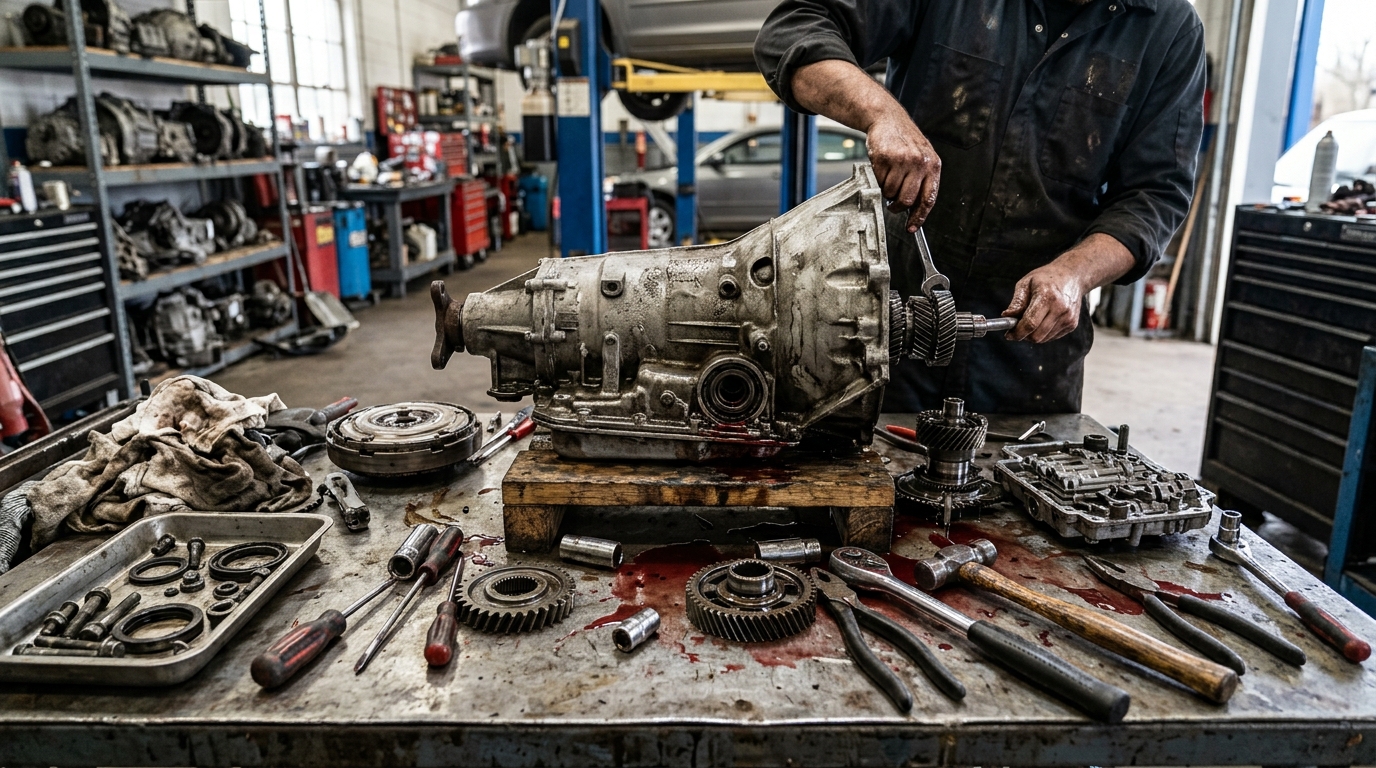
used transmission workbench
Furthermore, utilizing used auto parts is a highly sustainable practice. The automotive recycling industry plays a crucial role in reducing the carbon footprint associated with manufacturing new steel and plastic components. By choosing recycled OEM components, drivers in our local communities are directly contributing to a circular economy while reaping the benefits of superior automotive engineering.
Real-World Applications for Local Driving Conditions
The geographic diversity of our service areas presents unique challenges for vehicles, making the durability of OEM parts even more critical:
- Philadelphia, Pennsylvania: The notorious urban potholes and stop-and-go traffic place immense stress on suspension and braking systems. OEM control arms and struts are forged from superior metallurgy to withstand these impacts, whereas cheap aftermarket equivalents are prone to premature bending and bushing failure.
- Annapolis, Maryland: Coastal humidity and salt air accelerate rust and corrosion. Genuine factory body panels feature proprietary multi-stage galvanization and e-coating processes that aftermarket panels typically lack, ensuring your vehicle remains rust-free for longer.
- Cherry Hill, New Jersey & Dover, Delaware: High-speed highway commuting requires perfect aerodynamic fitment. An aftermarket bumper with poor fitment can create wind noise, reduce fuel efficiency, and negatively impact the vehicle’s handling dynamics. OEM fascias ensure the air flows exactly as the manufacturer intended.
How JP Auto Hub Ensures Premium Quality
Not all used parts are created equal. The distinction between a standard salvage yard and a premium supplier lies in the testing and verification process. At JP Auto Hub, we employ a rigorous quality assurance protocol to ensure that every component we sell meets strict performance criteria. Our inventory of used auto parts undergoes visual inspections, mechanical testing, and electronic verification before it is ever cataloged.
When a driver or a repair shop orders from us, they are receiving a part that has been graded for mileage, wear, and overall condition. We understand that a mechanic’s time is valuable; supplying a part that fits perfectly the first time eliminates the frustrating and costly delays associated with modifying aftermarket parts to fit.
Sourcing the Right OEM Parts for Your Vehicle
Finding the exact match for your vehicle’s make, model, and year is critical. Our advanced inventory system tracks OEM part numbers, ensuring complete compatibility. Whether you are searching for a replacement transmission, a pristine passenger-side door, or a complex infotainment module, you can easily browse our extensive catalog. Visit our Shop to explore our current inventory of rigorously tested, high-quality recycled car parts.
Understanding the Hidden Risks of Cheap Aftermarket Alternatives
The initial price tag of an aftermarket part might seem appealing, but the long-term costs often far exceed the savings. Mechanics frequently refer to the “aftermarket tax”—the extra labor hours required to make an inferior part fit. If an aftermarket fender requires two hours of bodywork and modification to align with the hood and doors, the initial savings are instantly wiped out by increased labor rates.
📹 Recommended Video
For a visual guide, search “OEM vs aftermarket auto parts fitment comparison” on
YouTube.
Moreover, the integration of Advanced Driver Assistance Systems (ADAS) in modern vehicles has made exact fitment a matter of life and death. Sensors for lane-keeping assist, adaptive cruise control, and automatic emergency braking are often mounted behind bumpers, grilles, and windshields. If an aftermarket bumper cover is even slightly thicker or molded with a different plastic composition than the OEM original, it can blind the radar sensors, rendering the safety systems inoperable. OEM parts guarantee that these critical safety features function exactly as designed.
The Impact on Vehicle Resale Value
Savvy car buyers and dealership appraisers can easily spot aftermarket repairs. Mismatched paint textures, uneven panel gaps, and the presence of non-factory branding on components immediately depreciate a vehicle’s value. Maintaining your car with genuine OEM parts preserves its authenticity and ensures you command the highest possible price when it comes time to sell or trade in.
Conclusion: Make the Smart Choice for Your Vehicle
Whether you are a daily commuter in Cherry Hill, a weekend cruiser in Annapolis, or navigating the busy streets of Philadelphia and Dover, your vehicle deserves the uncompromising quality of original factory engineering. The risks associated with cheap aftermarket components—ranging from poor fitment and increased labor costs to compromised safety systems—simply aren’t worth the perceived initial savings.
By choosing premium recycled car parts, you are investing in guaranteed fitment, superior durability, and environmental sustainability. Don’t compromise on your vehicle’s integrity. If you have questions about part compatibility or need assistance finding a specific component, our team of automotive experts is here to help. Reach out to us through our Contact page, and let us provide the exact factory-spec parts you need to get back on the road safely and confidently.





Copyright 2025 © J&P All right reserved. Powered by IzyoX
