
Essential Parts to Check Before the First Winter Snow in the Northeast

Essential Parts to Check Before the First Winter Snow in the Northeast
As the vibrant autumn leaves begin to fall across the Northeast, automotive enthusiasts and daily commuters alike know what is looming on the horizon: winter. For drivers navigating the bustling corridors of Washington, D.C., the historic streets of Wilmington, Delaware, the college-town roads of Newark, Delaware, and the suburban avenues of Cherry Hill, New Jersey, the first winter snow brings a unique set of challenges. At JP Auto Hub, we know that proactive vehicle maintenance is the key to surviving freezing temperatures, icy roads, and corrosive road salt.
Why Winter Preparation Matters in the Northeast
The Northeast is notorious for its unpredictable winter weather. A mild morning in Washington, D.C. can quickly turn into a treacherous, icy commute by the time you reach Newark or Wilmington. Sub-zero temperatures drastically affect your vehicle’s mechanical and electrical systems. Fluids thicken, battery chemistry slows down, and rubber components become brittle. Preparing your car before the first snowflake falls isn’t just about convenience; it’s a critical safety measure.
Essential Parts to Inspect Before the Snow Flies
To ensure your vehicle is ready for the harsh months ahead, a thorough inspection of your vehicle’s core components is mandatory. Here are the essential parts you need to check.
1. The Battery and Charging System
Cold weather is the ultimate enemy of your car’s battery. At 32°F (0°C), a battery loses about 35% of its strength, and at 0°F (-18°C), it loses 60%. You must test your battery’s Cold Cranking Amps (CCA) to ensure it has the power to start a freezing engine. Furthermore, your alternator must be in top condition. During winter, your vehicle runs the heater, defroster, headlights, and windshield wipers simultaneously, putting a massive load on the charging system. If your alternator is whining or failing to maintain voltage, it’s time for a replacement.
2. Tires and Suspension Components
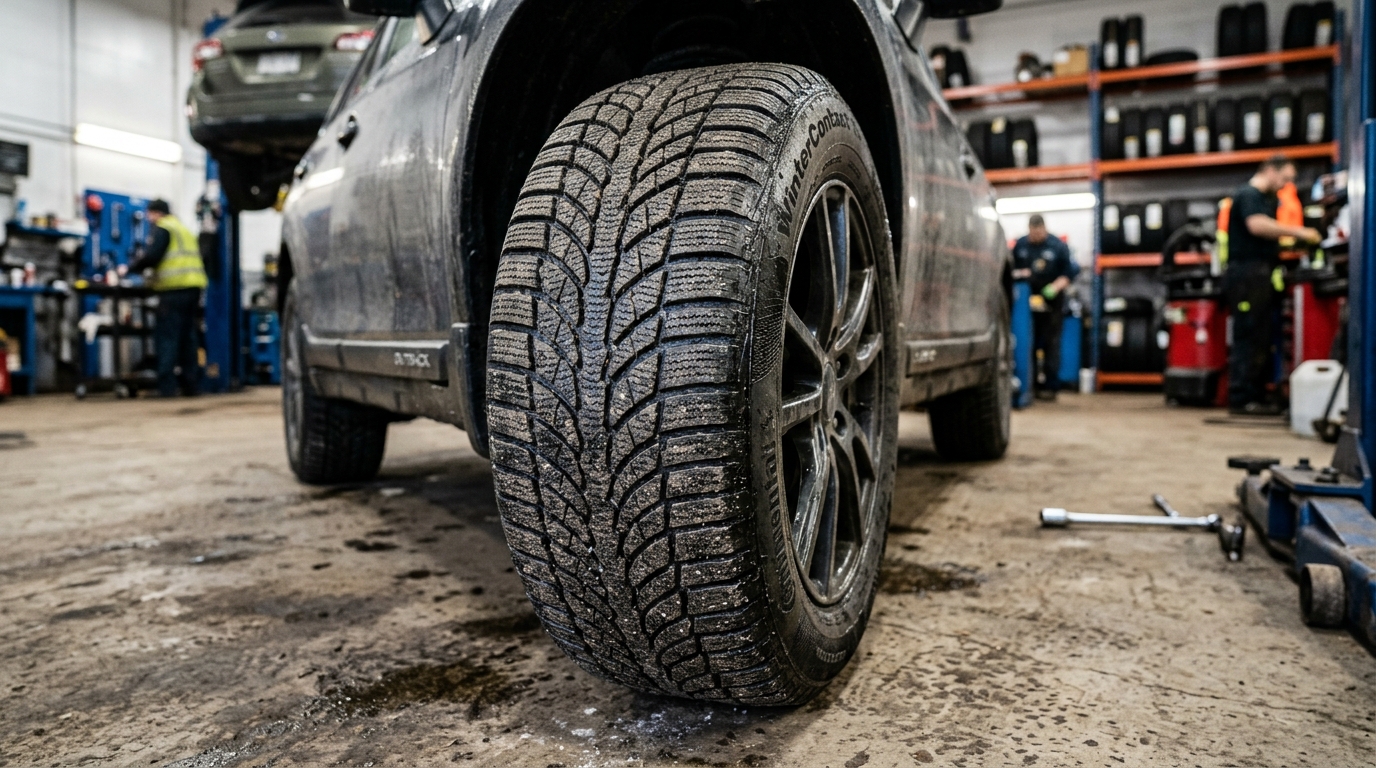
Your tires are the only contact patch between your two-ton vehicle and an icy road. Check your tread depth; anything below 4/32 of an inch is dangerous in the snow. Consider switching to dedicated winter tires if you frequently commute through Cherry Hill or Wilmington. Additionally, inspect your suspension. Cold weather makes rubber bushings brittle, and hidden potholes can destroy worn struts and control arms. Ensure your suspension is tight to maintain proper wheel alignment and traction.
car winter tire tread
3. Heating, Ventilation, and Air Conditioning (HVAC)
Your HVAC system is vital for more than just keeping you warm—it is essential for visibility. The heater core utilizes hot engine coolant to generate warm air, which the blower motor pushes through the vents to defrost your windshield. A clogged heater core or a failing blower motor can lead to a foggy, frozen windshield, effectively blinding you on the road. Test all fan speeds and ensure hot air is blowing consistently.
4. Wiper Motors and Fluid Reservoirs
Heavy, wet snow puts intense strain on your windshield wiper motor and transmission linkage. If your wipers are moving sluggishly during the fall rain, they will likely fail under the weight of December snow. Additionally, check your washer fluid reservoir and pump. Make sure you have swapped out summer bug-wash for a winter-grade fluid that won’t freeze in the lines or crack the reservoir tank.
Why Choose Used OEM Parts Over Cheap Aftermarket Alternatives?
When you discover a failing part during your winter inspection, you might be tempted by the influx of cheap aftermarket parts available online. However, professional mechanics and seasoned automotive journalists highly recommend sourcing used auto parts that are Original Equipment Manufacturer (OEM). Here is why replacing your components with recycled car parts from JP Auto Hub is the superior choice.
| Feature | Used OEM Parts (JP Auto Hub) | Cheap Aftermarket Parts |
|---|---|---|
| Fitment | Exact match. Engineered specifically for your vehicle’s make and model. | Often generic. May require modification or forceful installation. |
| Durability | Built with high-quality materials designed to withstand OEM stress tests. | Manufactured with inferior plastics and thin metals to cut costs. |
| Performance | Maintains factory performance, crucial for electrical parts like alternators. | Inconsistent output, often leading to premature failure in harsh weather. |
| Value | Highly cost-effective while retaining factory reliability. | Cheap upfront, but often results in expensive secondary repairs. |
When you buy OEM parts, you are getting components that were designed by the same engineers who built your car. Cheap aftermarket plastics often shatter in sub-zero temperatures, and aftermarket alternators frequently fail to deliver the precise voltage required by modern, computer-heavy vehicles. By choosing high-quality, tested recycled car parts from JP Auto Hub, you save money without sacrificing the safety and reliability you desperately need during a Northeast winter.
Sourcing the Best Winter Prep Parts at JP Auto Hub
Whether you are replacing a sluggish wiper motor in Washington, D.C., upgrading a failing alternator in Newark, Delaware, or swapping out a cracked washer fluid reservoir in Cherry Hill, New Jersey, having a reliable parts supplier is key. At JP Auto Hub, we thoroughly inspect and test our inventory to ensure you receive parts that will survive the winter.
Ready to find the exact part you need? Browse our extensive inventory by visiting our Shop.
How to Winterize Your Vehicle
For a visual guide on preparing your vehicle’s critical systems for the cold, check out this comprehensive tutorial:
📹 Recommended Video
For a visual guide, search “how to winterize your car before snow” on
YouTube.
Quick Winter Maintenance Checklist
Before the first snow advisory is issued, run through this final checklist:
- Test battery voltage and clean terminal corrosion.
- Inspect alternator output with a multimeter.
- Check tire tread depth and verify tire pressure (pressure drops in cold weather).
- Test the blower motor on all speed settings.
- Ensure the heater core is producing adequate heat.
- Inspect windshield wiper motor operation and replace wiper blades.
- Fill up with winter-rated windshield washer fluid.
- Check antifreeze/coolant freeze point with a hydrometer.
Conclusion
Don’t wait until you are stranded on the side of a snowy highway in Wilmington or sliding down an icy hill in Newark. Proactive maintenance is the hallmark of a responsible driver. Inspect your vehicle now, identify any weak links, and replace them with reliable, high-quality used auto parts. If you have questions about fitment or need help sourcing a specific component for your winter prep, don’t hesitate to reach out. Visit our Contact page, and let our experts at JP Auto Hub help you gear up for a safe and warm winter season.





Copyright 2025 © J&P All right reserved. Powered by IzyoX
