
What to Look for When Buying a Recycled Engine Assembly: The Ultimate Guide
What to Look for When Buying a Recycled Engine Assembly: A Complete Guide for Mid-Atlantic Drivers
For many vehicle owners in Baltimore, Maryland, Wilmington, Delaware, and Washington, D.C., an engine failure feels like the end of the road for their car. However, choosing a recycled engine assembly is a cost-effective, environmentally friendly, and reliable way to get back on the road. Navigating the world of used auto parts requires a keen eye and technical knowledge to ensure you are getting a component that will last for years to come.
At JP Auto Hub, we specialize in providing high-quality recycled car parts that meet rigorous standards. In this guide, we will break down the essential factors you must consider when purchasing a used engine, from verifying mileage to understanding the benefits of OEM parts over aftermarket alternatives.
The Value of Choosing Recycled OEM Parts
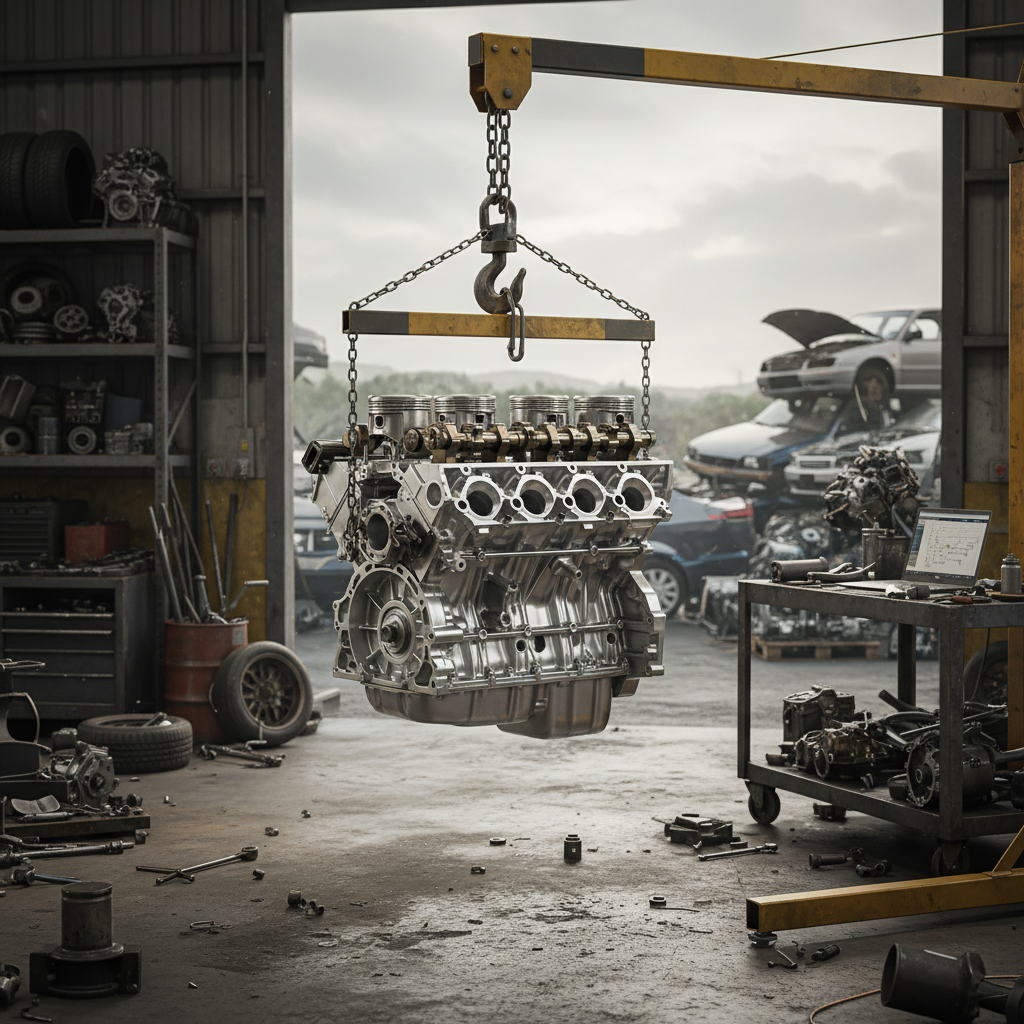
When searching for a replacement engine, you will likely encounter three options: brand-new crate engines, remanufactured engines, and recycled OEM (Original Equipment Manufacturer) engines. While new engines are prohibitively expensive, recycled OEM parts offer the perfect balance of affordability and reliability.
Unlike aftermarket components, which are designed by third-party companies to fit a wide range of vehicles, an OEM engine was built specifically for your make and model by the original manufacturer. This ensures that all bolt holes, wiring harness connections, and cooling passages align perfectly, reducing labor costs during installation and preventing long-term compatibility issues.
1. Verify the Mileage and Vehicle History
The most common question buyers ask is, “How many miles are on it?” While mileage is a critical indicator of wear, it is not the only factor. A 70,000-mile engine that received regular synthetic oil changes is often in better condition than a 40,000-mile engine that was neglected.
- Request the VIN: Always ask for the Vehicle Identification Number (VIN) of the donor car. This allows you to run a history report to see if the vehicle was involved in a flood (which can cause internal corrosion) or a fire.
- Maintenance Records: Whenever possible, choose a supplier like JP Auto Hub that tracks the source of their inventory.
2. Perform a Thorough Visual Inspection
Before the engine is crated for delivery to your mechanic in Newark, Delaware, or Washington, D.C., a visual inspection can reveal red flags that technical specs might miss.
Check for Leaks and Seepage
Look for signs of fresh oil around the head gasket, valve covers, and oil pan. While some minor seepage is common in older engines, heavy staining or puddling suggests that seals have failed. Replacing these seals is easier while the engine is out of the car, but significant leaks may indicate internal pressure issues.
Inspect the Oil and Coolant
Remove the oil fill cap and look inside. If you see a thick, milky substance (often compared to a chocolate milkshake), it is a sign of coolant mixing with oil—a classic symptom of a blown head gasket. Similarly, check the oil dipstick for “sludge,” which indicates that the previous owner did not change the oil frequently enough.
3. Technical Testing: Compression and Leak-Down
A reputable seller of used auto parts should perform or allow for technical testing. A compression test measures how much pressure the pistons are generating. If one cylinder is significantly lower than the others, the engine has internal wear that will lead to misfires and power loss.
A leak-down test is even more comprehensive. It involves injecting compressed air into the cylinder and measuring how much escapes. This can pinpoint exactly where a problem lies—whether it is the intake valves, exhaust valves, or piston rings.
Comparison: Recycled OEM vs. Aftermarket vs. Remanufactured
| Feature | Recycled OEM (JP Auto Hub) | Cheap Aftermarket | Remanufactured |
|---|---|---|---|
| Fitment | 100% Guaranteed Factory Fit | Variable/Poor | High |
| Internal Quality | Original Factory Precision | Unknown/Third-Party | New/Refurbished |
| Cost | Budget-Friendly | Low | Very High |
| Longevity | High (Proven Reliability) | Unpredictable | Very High |
Why JP Auto Hub Beats Aftermarket Alternatives
In the competitive markets of Wilmington and Newark, Delaware, many “budget” shops offer aftermarket engine components. However, JP Auto Hub advocates for recycled OEM parts for several reasons. Aftermarket parts often use thinner castings or lower-grade alloys to save costs. In contrast, a recycled engine from a trusted salvage yard retains the integrity of the original engineering.
Furthermore, when you buy from JP Auto Hub, you are supporting a circular economy that reduces the environmental impact of manufacturing new steel and aluminum components. We serve the entire Mid-Atlantic region, ensuring that drivers in Baltimore and D.C. have access to sustainable, high-performance solutions.
📹 Recommended Video
For a visual guide, search “how to inspect a used engine for sale before buying” on
YouTube.
4. Understand the Warranty and Return Policy
Never buy a recycled engine “as-is” without a clear understanding of the warranty. Most reputable suppliers offer at least a 30, 60, or 90-day parts warranty. Some even offer extended labor warranties. Ensure you know what is covered: does the warranty include the timing belt, water pump, and sensors, or just the “long block” (the cylinder head and engine block)?
5. Shipping and Handling in the DMV Area
Engines are heavy, often weighing between 300 and 600 pounds. If you are ordering from Newark, DE, or Baltimore, MD, consider the logistics. Engines should be shipped on a sturdy pallet, drained of all fluids, and wrapped in plastic to prevent debris from entering the intake or exhaust ports. At JP Auto Hub, we take pride in our logistics, ensuring your recycled car parts arrive in the same condition they left our facility.
Conclusion: Making an Informed Decision
Buying a recycled engine assembly is a smart financial move that can extend the life of your vehicle by another 100,000 miles or more. By focusing on OEM quality, verifying vehicle history, and performing the necessary technical checks, you can avoid the pitfalls of the used market. Whether you are a DIY enthusiast in Wilmington or a professional shop owner in Washington, D.C., JP Auto Hub is your premier source for reliable used auto parts.
Ready to find the perfect engine for your vehicle? Browse our inventory or speak with one of our experts today to ensure you get the right part at the right price.





Copyright 2025 © J&P All right reserved. Powered by IzyoX
