
How to Diagnose a Clicking Starter Motor: Philadelphia DIY Guide
How to Diagnose a Clicking Starter Motor: Philadelphia DIY Guide
It is a scenario every driver in the Philadelphia metro area dreads: you’re running late for work in Camden, or perhaps you’re heading out for a weekend in Annapolis, you turn the key or press the start button, and all you hear is a frustrating ‘click.’ A clicking sound instead of a roaring engine is the classic symptom of a starter system failure. While it can be stressful, diagnosing the issue is a manageable task for any DIY enthusiast. In this guide, we will break down the technical nuances of starter failure and explain why sourcing used auto parts from JP Auto Hub is the smartest move for your wallet and your vehicle’s longevity.
Understanding the ‘Click’: What’s Happening Under the Hood?
Before you start pulling components apart, it is vital to understand what that clicking sound actually signifies. Generally, the sound falls into two categories: a single loud click or a rapid-fire succession of clicks. Each points to a different failure point in your electrical or mechanical system.
The Single Click
A single, sharp click usually indicates that the starter solenoid is engaging, but the motor itself isn’t spinning. This could be due to burned-out internal contacts within the starter or a seized motor. In many cases, this requires a full replacement with high-quality OEM parts to ensure compatibility with your vehicle’s electrical architecture.
Rapid-Fire Clicking
If you hear a sound like a machine gun, your starter solenoid is likely trying to engage but doesn’t have enough electrical current to hold the connection. This is frequently a battery or wiring issue rather than the starter itself. For drivers in humid or coastal areas like Wilmington, Delaware, or Cherry Hill, New Jersey, corrosion on battery terminals is a frequent culprit for this specific symptom.
Step-by-Step Diagnostic Process for Philadelphia DIYers
Follow these steps to isolate the problem before you head to the JP Auto Hub shop for a replacement.
1. The Battery Voltage Test
Most ‘starter’ problems are actually battery problems. Use a multimeter to check the resting voltage of your battery. A healthy battery should read approximately 12.6 volts. If it is below 12.2 volts, it may not have enough ‘cold cranking amps’ (CCA) to turn the motor. If you find your battery is failing, consider upgrading to recycled car parts that have been tested for performance.
2. Inspecting Terminals and Grounds
In the Tri-State area, road salt and humidity can lead to heavy oxidation. Check the thick red cable leading to the starter and the black ground cable attached to the chassis. If they are loose or covered in green/white powder, clean them with a wire brush. A poor connection here mimics a dead starter.
3. The ‘Tap’ Test
This is an old-school mechanic’s trick that still works. If you have a single-click situation, have an assistant hold the key in the ‘start’ position while you gently tap the starter motor housing with a tool. This can sometimes jar the internal brushes into making contact. If the car starts, you have confirmed the starter is failing and needs immediate replacement.
📹 Recommended Video
For a visual guide, search “how to diagnose a clicking starter motor with a multimeter” on
YouTube.
Identifying Starter Motor Failure Symptoms
To help you distinguish between various issues, refer to the table below:
| Symptom | Probable Cause | Recommended Action |
|---|---|---|
| Single Loud Click | Faulty Starter Solenoid | Replace with OEM Starter |
| Rapid Clicking | Low Battery/Corroded Terminals | Clean terminals or charge battery |
| Whirring/Spinning Sound | Bendix Gear not engaging | Replace Starter Motor |
| Grinding Noise | Worn Flywheel or Starter Pinion | Inspect Flywheel teeth immediately |
| Smoke or Burning Smell | Internal Short/Overheating | Disconnect battery and replace starter |
Why Used OEM Parts Beat Cheap Aftermarket Alternatives
When you discover that your starter is indeed the culprit, you face a choice: buy a brand-new aftermarket unit from a big-box retailer or source a used auto part from a reputable supplier like JP Auto Hub. For residents in the Philadelphia and Cherry Hill regions, the choice should be clear.
The Quality Gap
Cheap aftermarket starters are often built with inferior copper windings and lower-grade magnets to keep costs down. They may fit the mounting holes, but they rarely match the torque output of the original equipment. OEM parts, even when used, are engineered specifically for your engine’s compression and electrical load. By choosing recycled car parts, you are getting the same engineering excellence that the manufacturer intended, at a fraction of the ‘new’ price.
Environmental and Economic Impact
Choosing recycled car parts reduces the demand for new raw materials and keeps perfectly functional machinery out of landfills. At JP Auto Hub, we meticulously inspect our inventory to ensure that every starter motor we sell provides the reliability you need for your daily commute through Wilmington or Annapolis.
Installing Your Replacement Starter
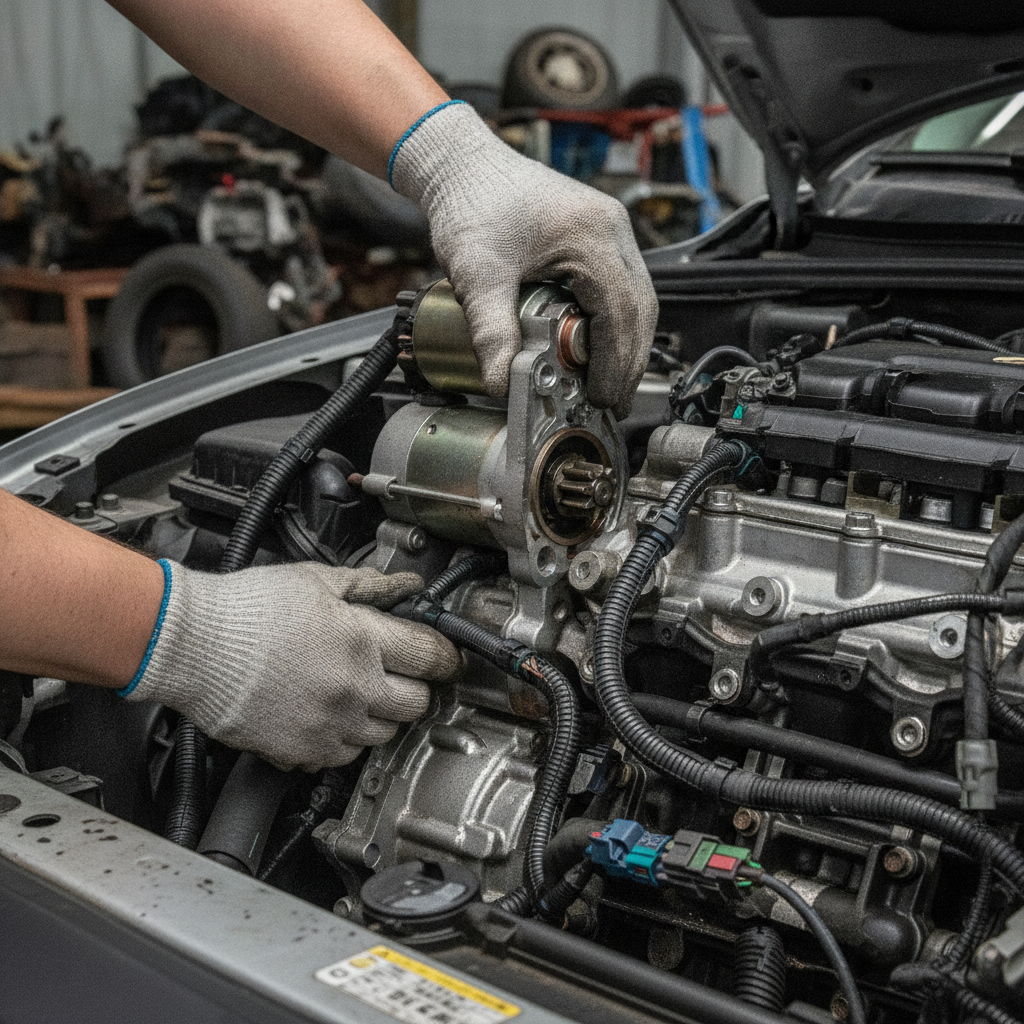
Once you have secured your part from our inventory, installation is generally a ‘bolt-on’ affair. Most starters are held in place by two or three long bolts and two electrical connections (the ‘B’ terminal for the main battery cable and the ‘S’ terminal for the ignition trigger). Always disconnect the negative battery terminal before beginning work to avoid dangerous short circuits.
Conclusion: Get Back on the Road with JP Auto Hub
Diagnosing a clicking starter doesn’t have to be an expensive nightmare. By understanding the symptoms and performing a few simple tests, you can save hundreds of dollars in labor costs. When it comes time to swap the part, don’t settle for ‘universal’ aftermarket junk that might fail in six months. Trust the durability of genuine OEM parts.
Whether you are in the heart of Philadelphia or the suburbs of Cherry Hill, contact us today or browse our online inventory to find the exact match for your vehicle. At JP Auto Hub, we pride ourselves on providing the Tri-State area with the highest quality used auto parts to keep your vehicle running smoothly for years to come.





Copyright 2025 © J&P All right reserved. Powered by IzyoX
