
What to Look for When Buying a Recycled Engine Assembly: A Comprehensive Guide
What to Look for When Buying a Recycled Engine Assembly: A Comprehensive Guide
When the heart of your vehicle fails, the decision on how to replace it is one of the most significant financial and mechanical choices you will make. For drivers in Wilmington, Delaware, Philadelphia, Pennsylvania, and the surrounding areas, the choice often boils down to three options: a brand-new crate engine, a rebuilt/remanufactured unit, or a high-quality recycled engine assembly. Increasingly, savvy car owners and professional mechanics are turning to recycled car parts as the most cost-effective and reliable solution.
Buying a recycled engine—often referred to as a used engine—doesn’t just save money; it preserves the original engineering integrity of your vehicle. However, not all used auto parts are created equal. To ensure you are getting a component that will last another 100,000 miles, you need to know exactly what to look for. This guide, provided by the experts at JP Auto Hub, will walk you through the technical nuances of selecting a recycled engine assembly.
Why Choose Recycled OEM Parts Over Aftermarket?
Before diving into the inspection process, it is vital to understand why OEM parts (Original Equipment Manufacturer) are superior to aftermarket alternatives. When you buy a recycled engine assembly from JP Auto Hub, you are purchasing a unit that was built to the exact specifications of the vehicle manufacturer.
The Precision of Engineering
Aftermarket engine components are often designed to fit a wide range of models to save on manufacturing costs. This “one size fits many” approach can lead to minor discrepancies in bolt patterns, sensor placements, and internal tolerances. In contrast, a recycled OEM engine from a reputable source ensures that every internal clearance and external mounting point is exactly as the factory intended. This precision reduces installation time and prevents premature failure caused by component mismatch.
Economic and Environmental Impact
Choosing recycled parts is the ultimate form of automotive recycling. It keeps high-quality steel and aluminum out of landfills while requiring significantly less energy than manufacturing a new engine from scratch. For residents in Newark, Delaware, or Dover, Delaware, sourcing locally from JP Auto Hub also reduces the carbon footprint associated with long-distance shipping.
| Feature | Recycled OEM (JP Auto Hub) | Aftermarket/Generic | Remanufactured |
|---|---|---|---|
| Fitment | 100% Guaranteed Factory Fit | Variable / May require mods | Factory Fit |
| Cost | Most Economical | Moderate | Highest |
| Internal Components | Original Factory Grade | Varies by Brand | Newer, often non-OEM |
| Reliability | Proven Real-world Performance | Uncertain Longevity | High (if done correctly) |
Critical Inspection Points for Used Engine Assemblies
When you are browsing for an engine, you must look beyond the price tag. A truly high-quality recycled engine assembly should be vetted through a rigorous series of checks.
1. Verification of Mileage and VIN
The first step in any engine purchase is verifying the mileage. While lower mileage is generally preferred, the maintenance history is equally important. At JP Auto Hub, we provide transparent data regarding the donor vehicle. Always check the 8th digit of your VIN to ensure compatibility, as manufacturers often change engine configurations mid-year.
2. The Leak-Down and Compression Test
A visual inspection only tells half the story. A compression test measures how well the engine’s pistons are sealing against the cylinder walls. Significant variance between cylinders (usually more than 10-15%) indicates worn rings or valve issues. A leak-down test goes further, identifying exactly where pressure is escaping—whether through the intake valves, exhaust valves, or head gasket.
3. Inspection for Sludge and Carbon Buildup
Ask to see the engine with the oil cap removed or, if possible, the valve cover. A clean engine will have a golden-brown hue on the internal components. Thick, black, jelly-like substance (sludge) is a clear sign of neglected oil changes. This sludge can block oil passages, leading to catastrophic failure shortly after installation.
4. External Component Condition
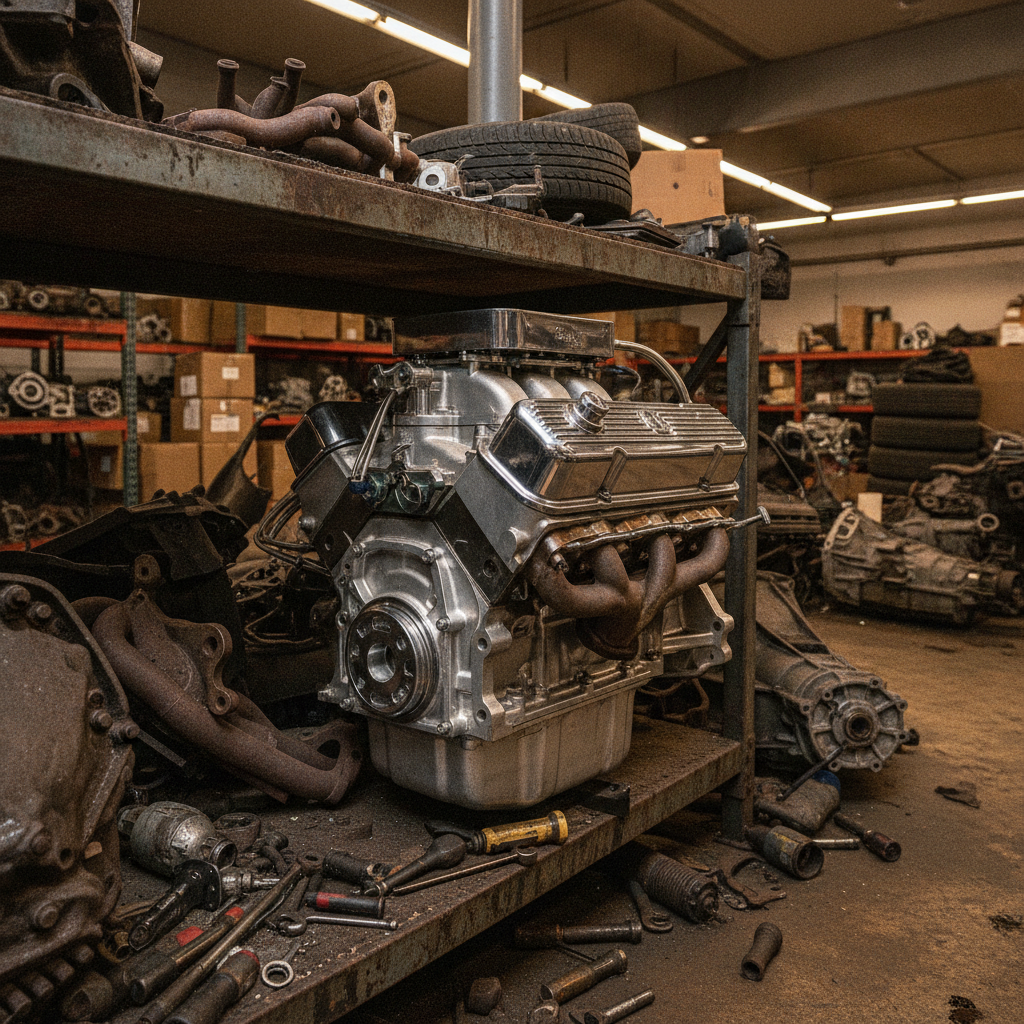
While the “long block” (the block and heads) is the core of the assembly, the condition of the external components matters. Check the following:
- Manifolds: Look for cracks in the exhaust manifold.
- Wiring Harness: Ensure the connectors haven’t been hacked or brittle from heat.
- Oil Pan: Inspect for dents that could interfere with the oil pickup tube.
- Pulley Alignment: Ensure the harmonic balancer and other pulleys are straight.
📹 Recommended Video
For a visual guide, search “how to inspect a used engine before buying guide” on
YouTube.
The JP Auto Hub Quality Standard
For customers in Philadelphia, Pennsylvania, and Wilmington, Delaware, JP Auto Hub has become the trusted name for used auto parts. We don’t just pull engines; we curate them. Our process involves a multi-point inspection that filters out sub-par units before they ever reach our inventory.
We understand that an engine swap is a labor-intensive process. The last thing a mechanic in Newark or a DIYer in Dover wants is to install an engine only to find it has a knock or a blown head gasket. By focusing on recycled car parts that meet strict OEM standards, we provide peace of mind that aftermarket competitors simply cannot match.
Serving the Mid-Atlantic: Delivery and Logistics
One of the biggest hurdles in buying an engine is logistics. Engine assemblies are heavy, awkward, and fragile. JP Auto Hub specializes in the secure transport of large mechanical assemblies throughout the Mid-Atlantic region. Whether you are a shop in the heart of Philly or a hobbyist in rural Delaware, our shipping and handling processes ensure your engine arrives in the same condition it left our facility.
What’s Included in the Assembly?
It is important to clarify what “assembly” means. Generally, a recycled engine assembly includes the block, heads, oil pan, and timing cover. Often, it includes the intake and exhaust manifolds, fuel injectors, and various sensors. However, items like the alternator, AC compressor, and starter are typically considered “bolt-on” accessories and may need to be transferred from your old engine.
Installation Best Practices for Recycled Engines
Once you’ve received your high-quality engine from JP Auto Hub, follow these steps to ensure a successful startup:
- Replace Wear Items: Even if the engine looks great, now is the time to replace the water pump, thermostat, timing belt (if applicable), and rear main seal. These are inexpensive parts that are difficult to reach once the engine is in the car.
- Flush the System: Ensure your radiator is clean and free of debris from the previous engine failure.
- Prime the Oil System: Before starting the engine for the first time, disable the ignition and crank the engine to build oil pressure.
- Scan for Codes: Use an OBD-II scanner to ensure all sensors are communicating correctly with your vehicle’s ECU.
Conclusion
Buying a recycled engine assembly is a smart, sustainable, and fiscally responsible way to keep your vehicle on the road. By focusing on OEM parts and performing due diligence on mileage and mechanical health, you can avoid the pitfalls of low-quality alternatives. For the best selection of used auto parts in Wilmington, Dover, Newark, and Philadelphia, look no further than JP Auto Hub.
Ready to find your next engine? Browse our online shop or contact our team of experts today to verify fitment and availability for your specific vehicle.





Copyright 2025 © J&P All right reserved. Powered by IzyoX
