

Buying Used ECU Modules: What Drivers Need to Know
Buying Used ECU Modules: What Drivers Need to Know
Modern vehicles are marvels of digital engineering, relying heavily on a network of computers to manage everything from fuel injection to cabin climate. At the heart of this network lies the Engine Control Unit (ECU), sometimes referred to as the Engine Control Module (ECM) or Powertrain Control Module (PCM). When this critical component fails, your vehicle can become an oversized paperweight. For drivers facing a hefty repair bill, purchasing a brand-new factory module can be financially devastating. This is where the strategic purchase of used auto parts becomes invaluable.
If you are a driver in Cherry Hill, New Jersey, Wilmington, Delaware, Baltimore, Maryland, or Camden, New Jersey, understanding how to source and replace an ECU can save you thousands of dollars. In this comprehensive guide, we will dive deep into the technical nuances of engine control units, how to identify a failure, and why sourcing recycled car parts from JP Auto Hub is the superior choice for your vehicle’s longevity and performance.
The Technical Role of the Engine Control Unit (ECU)
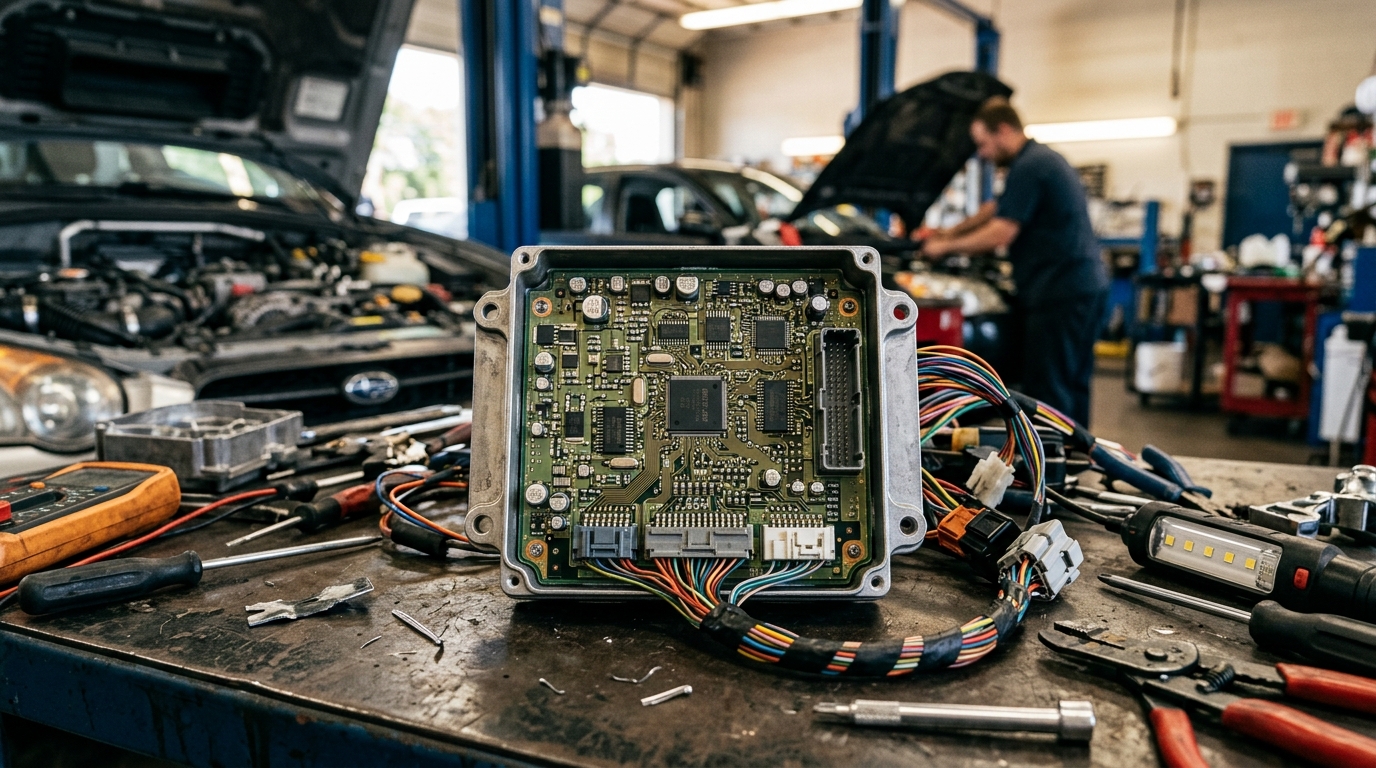
The ECU is the brain of your internal combustion engine. It continuously reads data from a multitude of sensors—including the Mass Airflow Sensor (MAF), Manifold Absolute Pressure (MAP) sensor, Oxygen (O2) sensors, and the Crankshaft Position Sensor. Using this real-time data, the ECU’s microprocessor executes complex algorithms (fuel maps and ignition tables) to adjust the air-fuel mixture, idle speed, and variable valve timing.
Inside the ECU, components like the EEPROM (Electrically Erasable Programmable Read-Only Memory) store the vehicle’s unique parameters, including the Vehicle Identification Number (VIN) and immobilizer security keys. Because the ECU communicates with other modules via the Controller Area Network (CAN) bus, any internal short circuit, moisture intrusion, or voltage spike can disrupt the entire vehicle ecosystem.
Symptoms of a Failing ECU
Before you begin hunting for replacement OEM parts, it is crucial to confirm that the ECU is actually the culprit. ECU failures often mimic other mechanical or electrical issues. Look out for these definitive warning signs:
- Intermittent Stalling or Misfiring: If the ECU fails to send the correct pulse width to the fuel injectors or proper timing to the ignition coils, the engine will misfire, stumble, or stall unpredictably.
- Unresponsive Check Engine Light (CEL): A glowing CEL is common, but if your OBD-II scanner cannot establish a communication link with the ECU, the module itself may have suffered a catastrophic hardware failure.
- Sudden Drop in Fuel Economy: A corrupted fuel map inside the ECU can cause the engine to run excessively rich, dumping unburned fuel into the exhaust and destroying catalytic converters.
- Failure to Start: If the ECU’s immobilizer circuit fails to recognize the transponder in your key, it will proactively disable the fuel pump and starter motor.
Why Choose Used OEM Parts Over Cheap Aftermarket Alternatives?
When faced with a dead ECU, many drivers are tempted by cheap, unbranded aftermarket modules found on discount websites. As an expert automotive journalist, I cannot stress enough the dangers of this approach. Aftermarket ECUs often utilize reverse-engineered firmware that struggles to communicate effectively over the vehicle’s CAN bus. This can lead to ghost codes, erratic shifting in automatic transmissions, and a lack of integration with safety systems like ABS and Traction Control.
Buying used OEM parts ensures that you are installing a component engineered specifically by the original manufacturer for your exact make and model. At JP Auto Hub, we specialize in high-quality recycled car parts that have been rigorously tested for functionality. Below is a breakdown of why OEM is the only way to go:
| Feature | Used OEM ECU (JP Auto Hub) | Cheap Aftermarket ECU |
|---|---|---|
| Hardware Quality | Factory-grade circuit boards, military-spec soldering, and robust weather sealing. | Subpar circuitry, prone to thermal expansion failure and moisture intrusion. |
| Software Compatibility | 100% native compatibility with existing CAN bus and vehicle modules. | Reverse-engineered software that often triggers false diagnostic trouble codes (DTCs). |
| Immobilizer Integration | Easily reprogrammed to accept your factory keys and security parameters. | Often requires bypass modules or complex, unreliable workarounds. |
| Cost Effectiveness | Highly affordable compared to new OEM, retaining factory reliability. | Appears cheap initially, but often requires multiple replacements and costly diagnostics. |
Crucial Steps When Buying a Used ECU
Purchasing a used ECU is not as simple as buying a mechanical component like a fender or a mirror. It requires strict attention to detail to ensure technical compatibility.
1. Matching the Part Number Exactly
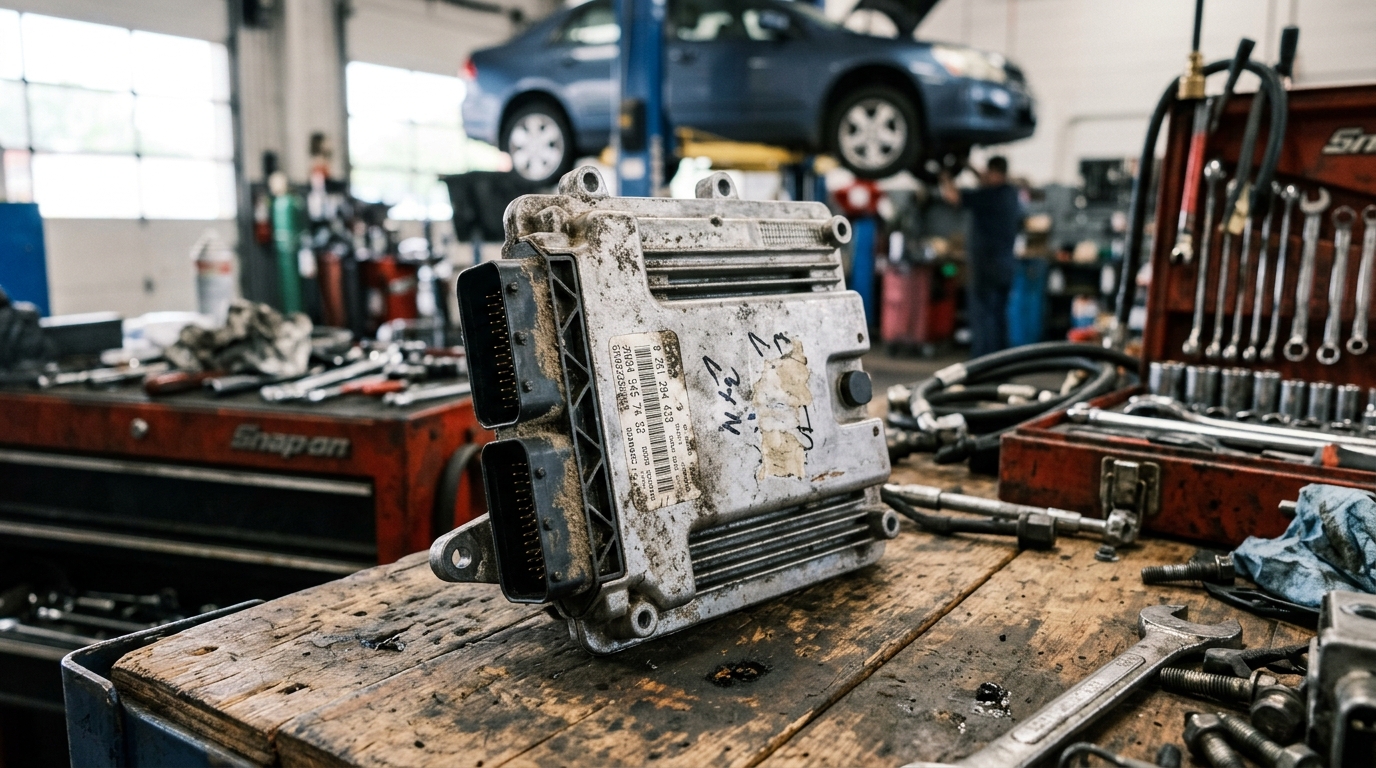
Automakers frequently update ECU hardware mid-production year. A module from a 2015 model might not work in a late-2015 model, even if they have the same engine. You must locate the OEM part number stamped on your original ECU’s casing (e.g., Bosch, Denso, or Delphi numbers) and match it character-for-character with the replacement unit.
2. VIN Flashing and Reprogramming
Almost all modern ECUs are “VIN-locked.” This means the computer is programmed to only operate within the specific vehicle it was originally installed in. When you buy a used ECU, it must be flashed (reprogrammed) with your vehicle’s VIN and updated with the latest manufacturer software calibrations. Many specialized automotive locksmiths and advanced repair shops in Cherry Hill, Wilmington, Baltimore, and Camden possess the J2534 pass-through devices required to perform this service.
📹 Recommended Video
For a visual guide, search “how to replace and program car ECU” on
YouTube.
3. Immobilizer and Anti-Theft Syncing
Along with the VIN, the replacement ECU must be introduced to your vehicle’s immobilizer system. If the ECU does not recognize the digital handshake from the Body Control Module (BCM) or the key transponder, it will cut fuel and spark. Always consult with a professional to ensure the used module is properly synced to your keys.
Sourcing Recycled Car Parts in the Mid-Atlantic
Finding a reliable source for an ECU is critical. Whether you are navigating the dense city traffic of Baltimore, Maryland, cruising the highways near Wilmington, Delaware, or commuting between Camden and Cherry Hill, New Jersey, you need a vehicle you can depend on. Local salvage yards can be a gamble, as modules are often left exposed to the elements, leading to internal corrosion.
used ecu module
At JP Auto Hub, we take the guesswork out of buying used auto parts. Our inventory is meticulously cataloged, stored in climate-controlled environments, and inspected for electrical integrity. We understand the technical demands of modern vehicles, which is why we provide drivers and mechanics with OEM parts they can trust.
Trust JP Auto Hub for Your Automotive Needs
Replacing an Engine Control Unit doesn’t have to be a nightmare of exorbitant dealership fees or unreliable aftermarket headaches. By choosing properly sourced, recycled OEM parts, you restore your vehicle’s brain to factory standards at a fraction of the cost.
If you are experiencing electrical gremlins or have been diagnosed with a faulty ECU, do not settle for less than factory quality. Browse our extensive inventory of rigorously tested modules by visiting our Shop. Have questions about part number compatibility or need assistance finding the exact module for your vehicle? Reach out to our expert team via our Contact page. For all your other automotive needs, head back to our Home page to see how JP Auto Hub is keeping drivers across the Mid-Atlantic safely on the road.





Copyright 2025 © J&P All right reserved. Powered by IzyoX
