

The Hidden Value in Salvage Yards: Finding Rare Parts for Classic Cars
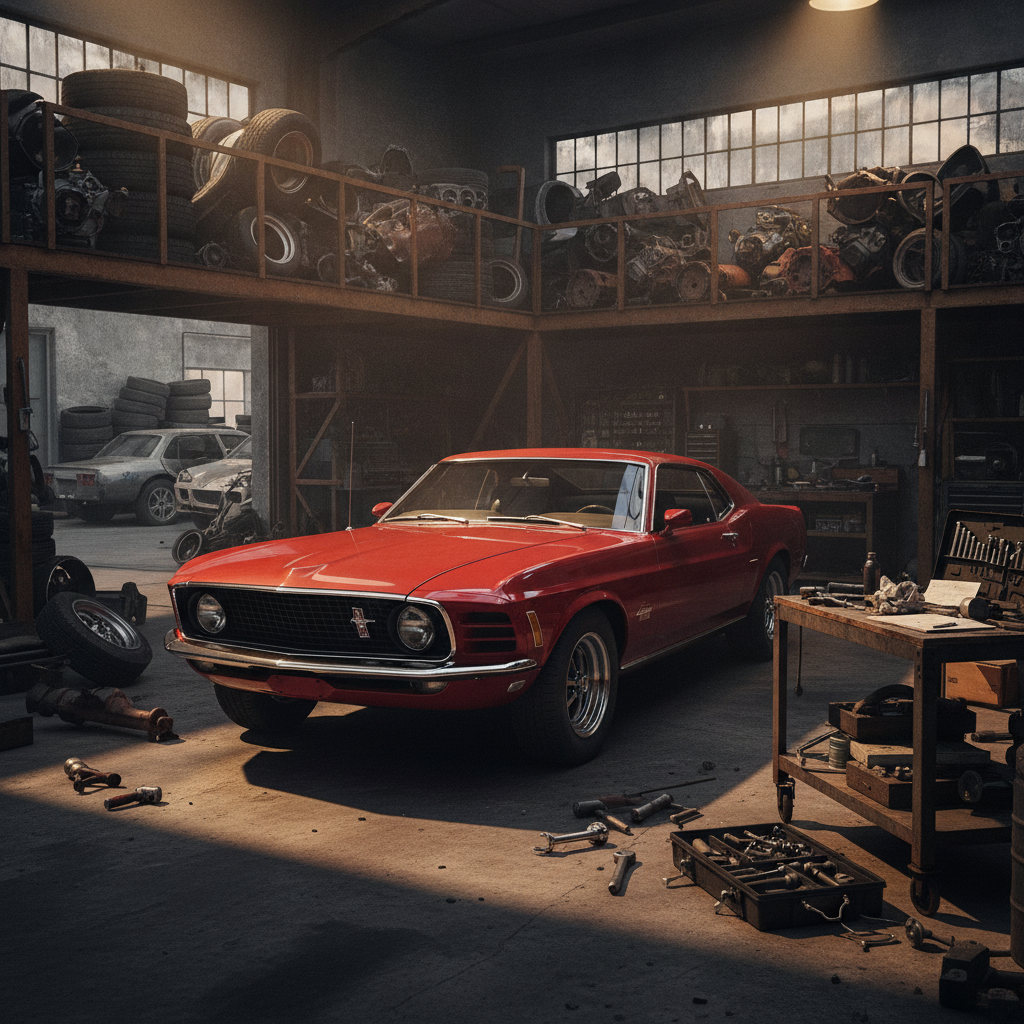
The Hidden Value in Salvage Yards: Finding Rare Parts for Classic Cars
For the automotive enthusiast in the Mid-Atlantic region—from the historic streets of Washington, D.C. to the suburban hubs of Cherry Hill, New Jersey—the search for the perfect component is a labor of love. Classic car restoration is more than a hobby; it is a preservation of history. However, as vehicles age, the availability of brand-new components dwindles. This is where the strategic use of used auto parts becomes essential. At JP Auto Hub, we recognize that the local salvage yard is not just a graveyard for old vehicles, but a goldmine of recycled car parts that can bring a vintage machine back to life.
The Critical Advantage of OEM Parts Over Aftermarket Alternatives
When restoring a classic vehicle in Dover, Delaware or Newark, Delaware, owners often face a crossroads: do they buy a cheap, new aftermarket part or hunt for a used OEM parts (Original Equipment Manufacturer) component? The technical answer almost always favors the latter. OEM parts were engineered specifically for the vehicle’s unique tolerances, weight distribution, and structural integrity. Aftermarket parts, while often cheaper, are frequently manufactured using ‘reverse engineering’ which can lead to slight variations in bolt-hole alignment, metal thickness, and finish quality.
Why Genuine Recycled Car Parts Matter
Classic cars were built in an era of heavy steel and specific metallurgical standards. A 1960s fender from a donor car at a salvage yard possesses the same gauge of steel and corrosion resistance as the original. In contrast, modern aftermarket replacements often use thinner alloys to save on shipping and production costs. By sourcing used auto parts from JP Auto Hub’s shop, you ensure that the structural ‘DNA’ of your classic remains intact.
Technical Comparison: Used OEM vs. New Aftermarket
To understand the value proposition, consider the following data comparing genuine recycled car parts to common aftermarket substitutes found in the Newark, DE and Cherry Hill, NJ markets.
| Feature | Used OEM Parts (JP Auto Hub) | Cheap Aftermarket Alternatives |
|---|---|---|
| Fitment Accuracy | 100% – Designed by the original manufacturer. | 85-95% – Often requires ‘massaging’ or drilling. |
| Material Integrity | Original spec (High-tensile steel/authentic alloys). | Lower grade substitutes (Thin gauge/plastic). |
| Resale Value | Maintains or increases classic car valuation. | Can decrease value due to lack of authenticity. |
| Longevity | Proven durability over decades. | Unknown; often prone to premature rust/failure. |
As the table illustrates, the technical benefits of OEM parts extend far beyond mere price. For a restorer in Washington, D.C., where traffic conditions and climate can be harsh, the reliability of an original steering rack or suspension arm is paramount.
Navigating the Salvage Landscape in the Mid-Atlantic
The corridor between Dover, Delaware and Cherry Hill, New Jersey is uniquely positioned for the classic car hunter. Because this region has a high density of long-term vehicle ownership, salvage yards often contain ‘survivor’ vehicles—cars that have been sitting in garages or barns for decades before entering the recycling stream. This provides a steady supply of recycled car parts that haven’t been exposed to the extreme road salts of the far north or the intense UV damage of the deep south.
Identifying Rare Components
When scouting for parts, focus on ‘hard’ components that are no longer in production. These include:
- Engine Blocks and Cylinder Heads: Finding a period-correct casting number is vital for ‘numbers-matching’ restorations.
- Trim and Brightwork: Chrome moldings and stainless steel trim from the 1950s-70s are nearly impossible to replicate with the same luster.
- Transmission Cases: Original housings for Muncie or Toploader transmissions are high-value finds in used auto parts inventories.
- Glass: Original safety glass often features date codes and manufacturer etchings that judges look for at concours events.
The Sustainability Factor: Why Recycling is the Future
Beyond the technical and financial benefits, choosing recycled car parts is an environmentally conscious decision. Manufacturing a new car part requires massive amounts of energy, raw material extraction, and carbon-heavy logistics. By utilizing the existing inventory at JP Auto Hub, restorers in Newark, DE and beyond are reducing the demand for new manufacturing and keeping perfectly functional steel out of landfills. It is the ultimate form of ‘upcycling.’
Quality Control at JP Auto Hub
One common fear among classic car owners is the ‘condition’ of used auto parts. At JP Auto Hub, we mitigate this risk through a rigorous inspection process. Unlike ‘pick-your-part’ yards where components are left open to the elements, our OEM parts are cataloged and stored to prevent degradation. Whether you are looking for a vintage alternator or a complete rear-end assembly, our team ensures the part is viable for restoration or immediate use.
📹 Recommended Video
For a visual guide, search “how to inspect used auto parts at a salvage yard classic car restoration” on
YouTube.
The Restoration Professional’s Secret
Professional shops in Cherry Hill, NJ and Washington, D.C. rarely rely on aftermarket catalogs for critical structural or mechanical work. They know that a used original door shell will hang straighter and close with a more satisfying ‘thud’ than a reproduction piece. By sourcing from JP Auto Hub, these professionals save their clients thousands of dollars in labor costs that would otherwise be spent trying to make poor-quality parts fit.
Conclusion: Preserving Automotive Excellence
The hidden value in salvage yards lies in the intersection of authenticity and economy. For the classic car community in Dover, Delaware and the surrounding areas, JP Auto Hub serves as a vital resource for maintaining the integrity of automotive history. By choosing used auto parts and recycled car parts, you aren’t just saving money—you are ensuring that your vehicle remains as close to its factory-delivered state as possible. Don’t settle for inferior substitutes; find the OEM parts your classic deserves and keep the heritage of the road alive.





Copyright 2025 © J&P All right reserved. Powered by IzyoX
