

Troubleshooting Common Transmission Issues in High-Mileage Vehicles: A Guide for Drivers in PA, DE, and MD
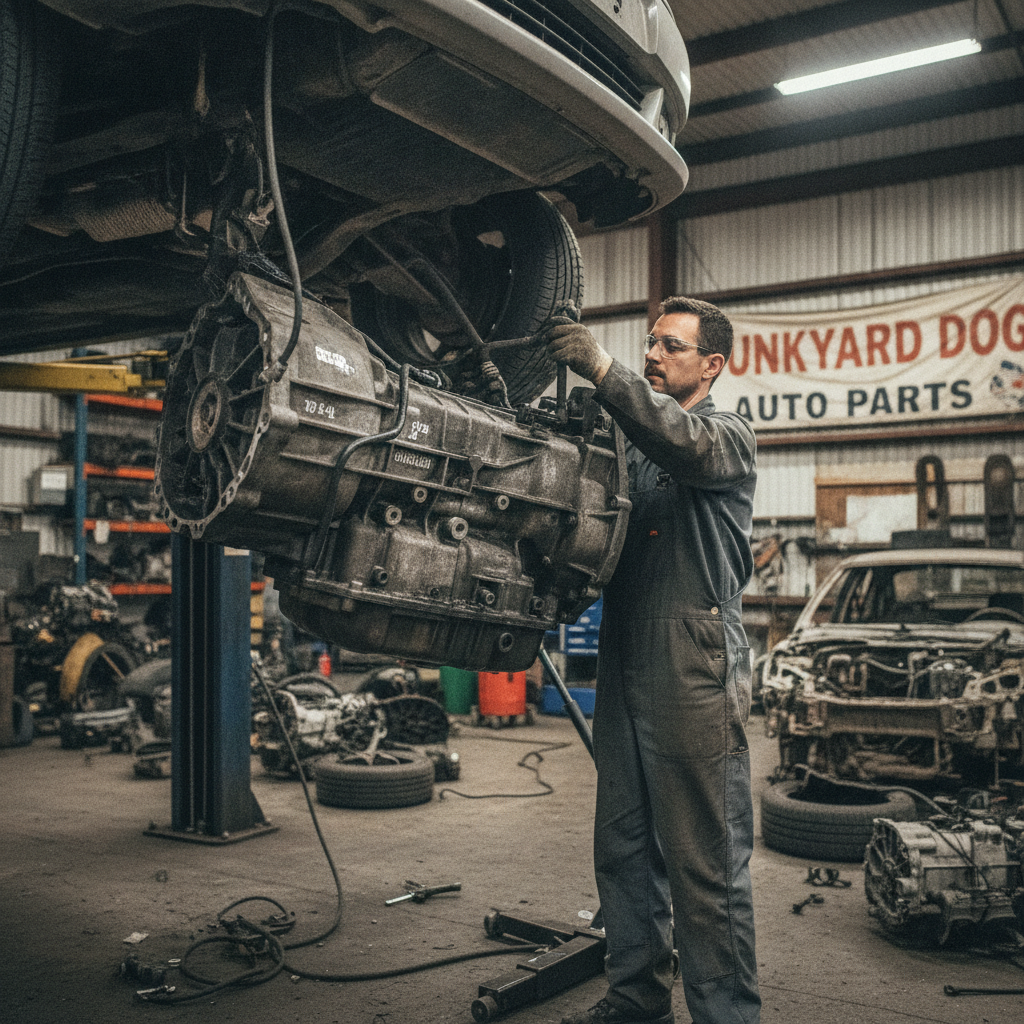
Troubleshooting Common Transmission Issues in High-Mileage Vehicles
Navigating the bustling streets of Philadelphia, Pennsylvania, or commuting between Newark, Delaware and Annapolis, Maryland, places significant stress on your vehicle’s drivetrain. As vehicles surpass the 100,000-mile mark, the transmission often becomes the most critical point of failure. Understanding the early warning signs and knowing where to source high-quality used auto parts can save you thousands of dollars in repair costs.
At JP Auto Hub, we understand that a transmission failure can be a major setback. This guide provides a deep dive into troubleshooting common issues and explains why recycled car parts are the smartest solution for maintaining your high-mileage vehicle.
Understanding Transmission Wear in Older Engines
Transmissions are complex systems consisting of hundreds of moving parts, including planetary gear sets, hydraulic valves, and electronic solenoids. Over time, heat and friction degrade the transmission fluid, leading to internal wear. In regions like Dover, Delaware, where seasonal temperature fluctuations are common, the rubber seals and gaskets inside the transmission can become brittle, leading to pressure losses and shifting irregularities.
Top 5 Signs of a Failing High-Mileage Transmission
Identifying a transmission problem early can prevent a total breakdown on the I-95 corridor. Here are the most common symptoms found in vehicles with high mileage:
1. Slipping Gears and High RPMs
If your engine revs up but the vehicle doesn’t accelerate accordingly, your transmission is likely slipping. This is often caused by worn friction plates or a low fluid level. In high-mileage cars, this can also indicate that the torque converter is failing to lock up properly.
2. Delayed Engagement or Hesitation
When you shift from ‘Park’ to ‘Drive’ or ‘Reverse,’ the engagement should be nearly instantaneous. A delay of more than two seconds usually points to a failing solenoid or a clogged internal filter. This is a common issue for drivers in Philadelphia who deal with constant stop-and-go traffic.
3. Unusual Noises: Grinding, Whining, or Clunking
Manual transmissions often manifest issues through grinding during shifts, whereas automatic transmissions tend to whine or clunk. A whining sound that changes pitch with engine RPM often signals a pump issue or a blocked fluid intake.
4. Transmission Fluid Leaks and Burning Smells
Transmission fluid is the lifeblood of the system. It should be a translucent red. If you notice dark brown or black fluid under your car in your Newark driveway, or if you smell something sweet and burnt, your transmission is overheating. Overheating is the #1 killer of automatic transmissions.
5. The Dreaded “Check Engine” or “Transmission” Light
Modern vehicles use the Engine Control Module (ECM) and Transmission Control Module (TCM) to monitor gear ratios and hydraulic pressures. If a sensor detects a deviation, it will trigger a Diagnostic Trouble Code (DTC) such as P0700 or P0730. Professional diagnostics are essential at this stage.
Technical Root Causes: Why Transmissions Fail After 100,000 Miles
To truly troubleshoot a transmission, one must understand the internal mechanics. Here is a breakdown of the technical failures common in older vehicles:
- Solenoid Failure: These electro-hydraulic valves control the flow of fluid. In high-mileage cars, the wire windings can fail, or debris can jam the plunger.
- Torque Converter Clutch (TCC) Wear: The TCC allows for a mechanical link between the engine and transmission at highway speeds. When it wears out, fuel economy drops and vibrations increase.
- Valve Body Wear: Often referred to as the “brain” of the transmission, the valve body contains channels that direct fluid. Over time, the metal can wear down, causing “cross-talk” between circuits and erratic shifting.
📹 Recommended Video
For a visual guide, search “how to diagnose automatic transmission problems shifting issues tutorial” on
YouTube.
The Solution: Repair vs. Replace
When a transmission fails, you are faced with three choices: a brand-new unit, a rebuild, or a high-quality used unit. For most high-mileage vehicles, a brand-new transmission costs more than the car’s market value. Rebuilding is labor-intensive and expensive. This is where OEM parts from a reputable source become the most viable option.
Why Used OEM Parts from JP Auto Hub Beat Aftermarket Alternatives
Many budget-conscious drivers in Annapolis and Dover are tempted by cheap aftermarket transmission components or “universal” rebuild kits. However, there is a significant difference in quality. Here is why choosing recycled car parts from JP Auto Hub is the superior choice:
| Feature | Used OEM (JP Auto Hub) | Cheap Aftermarket |
|---|---|---|
| Fitment | 100% Factory Guaranteed | Variable (May require modification) |
| Material Quality | High-Grade Steel/Alloys | Often lower-grade substitutes |
| Longevity | Proven durability | Unpredictable |
| Cost | Significant savings vs. New | Low, but high risk of failure |
OEM parts (Original Equipment Manufacturer) are designed specifically for your vehicle’s make and model. When you buy a used transmission or component from JP Auto Hub, you are getting a part that was engineered to meet the exact tolerances of your vehicle. Our used auto parts are inspected to ensure they provide the reliability you need to stay on the road.
Sourcing Parts in Newark, Philadelphia, Annapolis, and Dover
Finding reliable recycled car parts doesn’t have to be a gamble. JP Auto Hub serves the entire Mid-Atlantic region, providing a bridge between affordability and quality. Whether you are a DIY mechanic in Dover or a shop owner in Philadelphia, our inventory is curated to provide the best value for high-mileage vehicle repairs.
Conclusion
Transmission issues in high-mileage vehicles are inevitable, but they don’t have to mean the end of your car’s life. By recognizing the symptoms of slipping, delayed engagement, and fluid degradation early, you can take action before a catastrophic failure occurs. Choosing OEM parts from JP Auto Hub ensures that your vehicle remains a reliable tool for your daily commute through Delaware, Pennsylvania, and Maryland.
Ready to get back on the road? Contact us today to find the perfect transmission or component for your vehicle.





Copyright 2025 © J&P All right reserved. Powered by IzyoX
