

The Ultimate Guide to Buying a Used Transmission for Your Truck
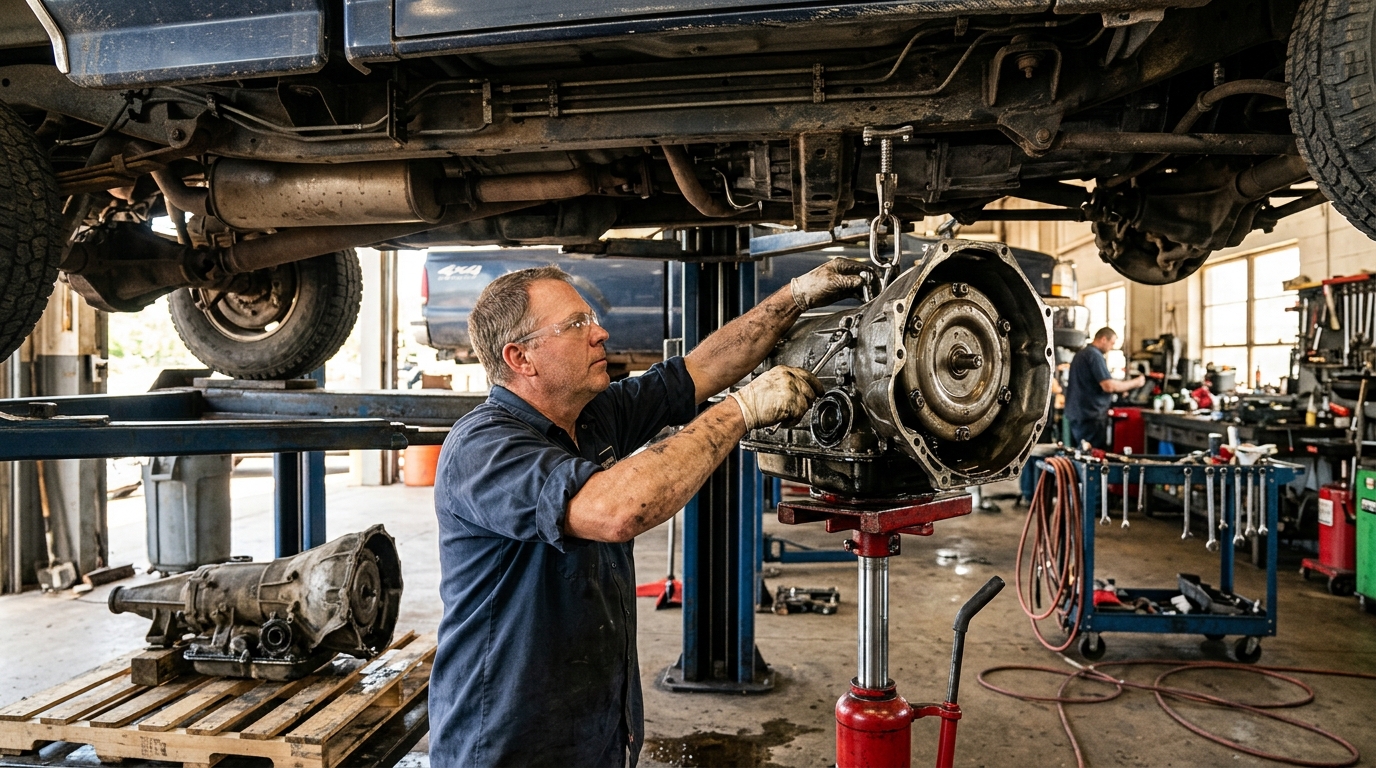
The Ultimate Guide to Buying a Used Transmission for Your Truck
There is nothing quite as daunting for a truck owner as feeling the dreaded slip, shudder, or clunk of a failing transmission. Whether you are hauling heavy loads through the busy industrial sectors of Baltimore, Maryland, navigating the stop-and-go urban grid of Washington, D.C., towing a boat near the coastal waters of Annapolis, Maryland, or running commercial delivery routes across Newark, Delaware, your truck’s transmission is the beating heart of its drivetrain. When it fails, you are faced with a significant decision: do you buy a brand-new unit, risk an aftermarket rebuild, or source a high-quality used transmission?
For most truck owners and fleet managers, buying a used transmission is the most cost-effective and reliable route—provided you know exactly what to look for. In this comprehensive guide, we will walk you through the technical intricacies of sourcing recycled car parts and explain why trusting a reputable supplier like JP Auto Hub is your best defense against premature drivetrain failure.
Why Buy Used OEM Parts Over Cheap Aftermarket Alternatives?
The automotive market is flooded with cheap, unbranded aftermarket parts and low-budget rebuild kits. While the initial price tag of an aftermarket transmission might seem appealing, the long-term costs can be devastating. Here is why sourcing used auto parts that are strictly OEM (Original Equipment Manufacturer) is the superior choice for your truck.
The Pitfalls of Aftermarket Transmissions
Aftermarket manufacturers often cut corners to keep prices low. This can mean utilizing inferior metals for gear sets, using substandard friction materials in the clutch packs, or installing generic solenoids that do not communicate perfectly with your truck’s Transmission Control Module (TCM). A truck transmission endures immense torque and thermal stress. Cheap aftermarket components are notorious for warping under heavy towing loads, leading to catastrophic failure just outside of their limited warranty periods.
The OEM Advantage
When you purchase OEM parts, you are getting components engineered specifically by the manufacturer (Ford, General Motors, Stellantis/Ram, etc.) to handle the exact Gross Vehicle Weight Rating (GVWR) and torque output of your specific truck. A used OEM transmission from a salvaged vehicle retains the factory-grade hardening on its gears, the exact hydraulic tolerances required by the valve body, and the original sensors designed to sync flawlessly with your ECU. Buying a used OEM transmission means you are installing a unit that was built to the manufacturer’s rigorous standard—not a reverse-engineered imitation.
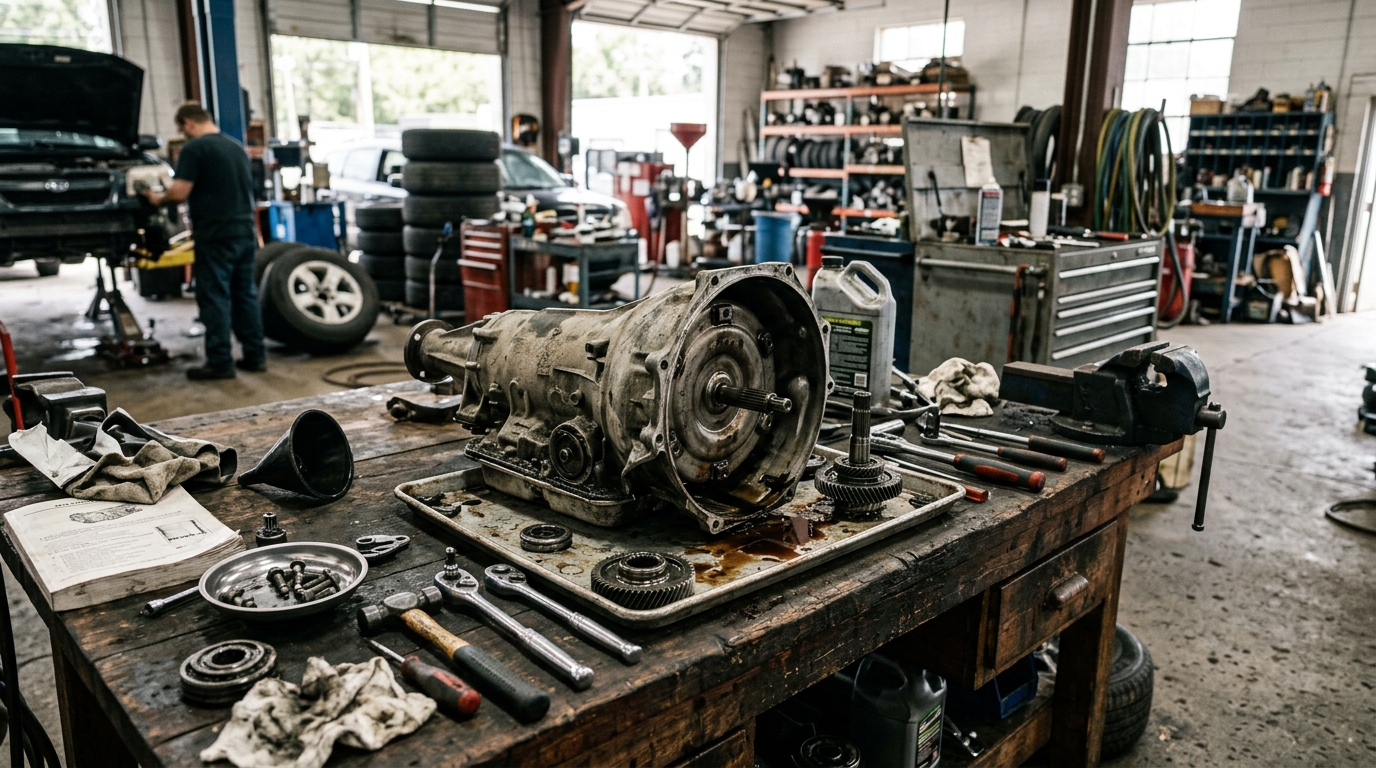
used transmission workbench
Essential Steps for Buying Recycled Car Parts
Buying a used transmission requires more than just knowing your truck’s make and model. Transmissions are highly complex, and automakers frequently update spline counts, bell housing bolt patterns, and electronic connectors even within the same model year. Here is a technical checklist to follow.
1. Verify Your VIN and Transmission Code
Never guess your transmission model. You must use your Vehicle Identification Number (VIN) to confirm the exact transmission code. For example, a Chevy Silverado might come with a 4L60E, 6L80, or an 8L90 depending on the engine displacement, trim level, and whether it is 2WD or 4WD. The transmission code dictates the gear ratios, the torque converter stall speed, and the TCM programming. Installing a transmission with a mismatched code will result in immediate limp mode and communication errors.
2. Inspect the Fluid and the Pan
If you have the opportunity to inspect the transmission in person, pull the dipstick or ask the supplier about the condition of the fluid. Used transmission fluid should be reddish or light brown. If the fluid is pitch black or smells burnt, the internal clutch packs are likely fried. Furthermore, dropping the transmission pan can reveal a lot. A fine layer of metallic dust on the pan magnet is normal wear and tear, but large metal shavings or chunks of brass indicate severe internal planetary gear damage.
3. Check the Bell Housing and Tail Shaft
Visually inspect the exterior of the aluminum casing. Look for hairline cracks around the bell housing, which can occur during a front-end collision or improper removal. Check the tail shaft (or transfer case adapter on 4WD models) for excessive play, which indicates worn output shaft bearings. Ensure all electrical harness connectors are intact and not crushed.
Common Truck Transmissions and What to Look For
Different trucks have different weak points. Here is a breakdown of common truck transmissions and specific technical aspects to verify when buying them used:
| Transmission Model | Common Application | Technical Inspection Points |
|---|---|---|
| Ford 6R80 (6-Speed) | F-150 (2009-2017) | Check the molded lead frame for cracks. Ensure the thermal bypass valve is intact. Verify the torque converter splines are free of rounding. |
| GM 6L80 (6-Speed) | Silverado / Sierra 1500 | Inspect the TEHCM (Transmission Electronic Hydraulic Control Module) connector. Ask if the torque converter has been inspected for TCC (Torque Converter Clutch) shudder. |
| Ram 68RFE (6-Speed) | Ram 2500/3500 Cummins | Examine the overdrive clutch hub for excessive wear. Verify the solenoid pack connector is free of transmission fluid intrusion. |
| Ford 10R80 / GM 10L80 | Modern F-150 / Silverado | Highly dependent on TCM flashing. Ensure the donor vehicle’s mileage is accurately documented and that the CDF clutch drum is functionally sound. |
📹 Recommended Video
For a visual guide, search “how to inspect a used auto transmission” on
YouTube.
How to Prepare Your Truck for a Replacement Transmission
Installing a used transmission is not simply a plug-and-play operation. To ensure the longevity of your newly acquired OEM part, you must perform the following preparatory steps:
- Flush the Transmission Cooler: This is non-negotiable. When your old transmission failed, it likely sent metal debris into the transmission cooler and lines. If you do not flush the cooler with a specialized solvent and compressed air, that debris will immediately pump into your new used transmission, destroying it within miles.
- Replace the Seals: Always replace the front pump seal (torque converter seal) and the rear output shaft seal while the transmission is out of the truck. These seals cost a few dollars but are incredibly labor-intensive to replace once the transmission is installed.
- Reset the TCM Adaptive Learning: Modern truck transmissions use adaptive learning to adjust shift pressures based on internal wear and your driving habits. After installing a used transmission, you must use a bidirectional scan tool to clear the adaptive memory. This allows the TCM to learn the hydraulic characteristics of the replacement unit.
Why JP Auto Hub is Your Trusted Source in the Mid-Atlantic
Finding a reliable supplier for heavy-duty truck components can be frustrating. At JP Auto Hub, we specialize in providing top-tier, thoroughly inspected recycled car parts and truck components to mechanics and DIY enthusiasts alike.
Whether your garage is located in the historic districts of Annapolis, Maryland, the bustling commercial zones of Baltimore, Maryland, the fast-paced environment of Washington, D.C., or the logistics hubs of Newark, Delaware, we ensure you have access to the highest quality parts. We do not just sell parts; we sell peace of mind. Every transmission that enters our inventory is meticulously cataloged, evaluated for fluid quality, and stored in a climate-controlled environment to prevent seal degradation.
The JP Auto Hub Quality Guarantee
We understand that a truck is a livelihood. Downtime means lost revenue. That is why our inventory is focused on providing genuine OEM parts that fit right the first time. By choosing us, you bypass the inflated costs of dealership parts departments and the unreliability of cheap aftermarket knock-offs.
Ready to Get Your Truck Back on the Road?
Do not let a blown transmission keep your truck parked. Take advantage of our extensive inventory of high-quality used transmissions and drivetrain components. Start your journey by visiting our Home page to learn more about our quality standards.
If you know exactly what transmission code you need, head straight over to our Shop to browse our current inventory of premium recycled components. Have a specific technical question about compatibility, torque converters, or freight shipping to Annapolis, Baltimore, D.C., or Newark? Reach out to our team of automotive experts via our Contact page. At JP Auto Hub, we are dedicated to keeping the Mid-Atlantic driving forward.





Copyright 2025 © J&P All right reserved. Powered by IzyoX
