
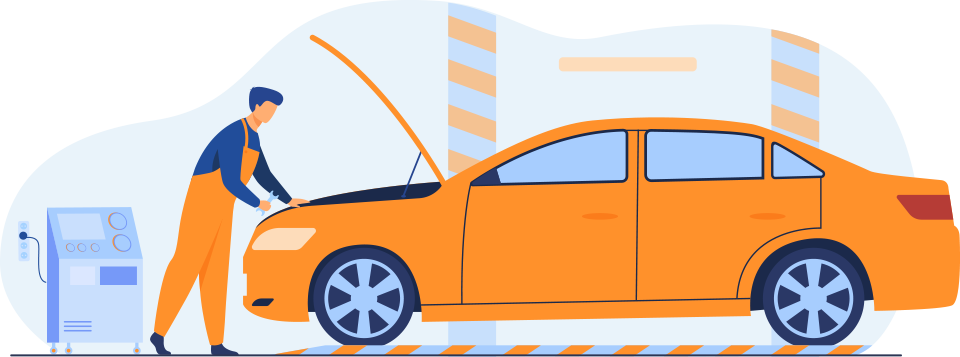
Why Used OEM Parts Beat Cheap Aftermarket Alternatives Every Time
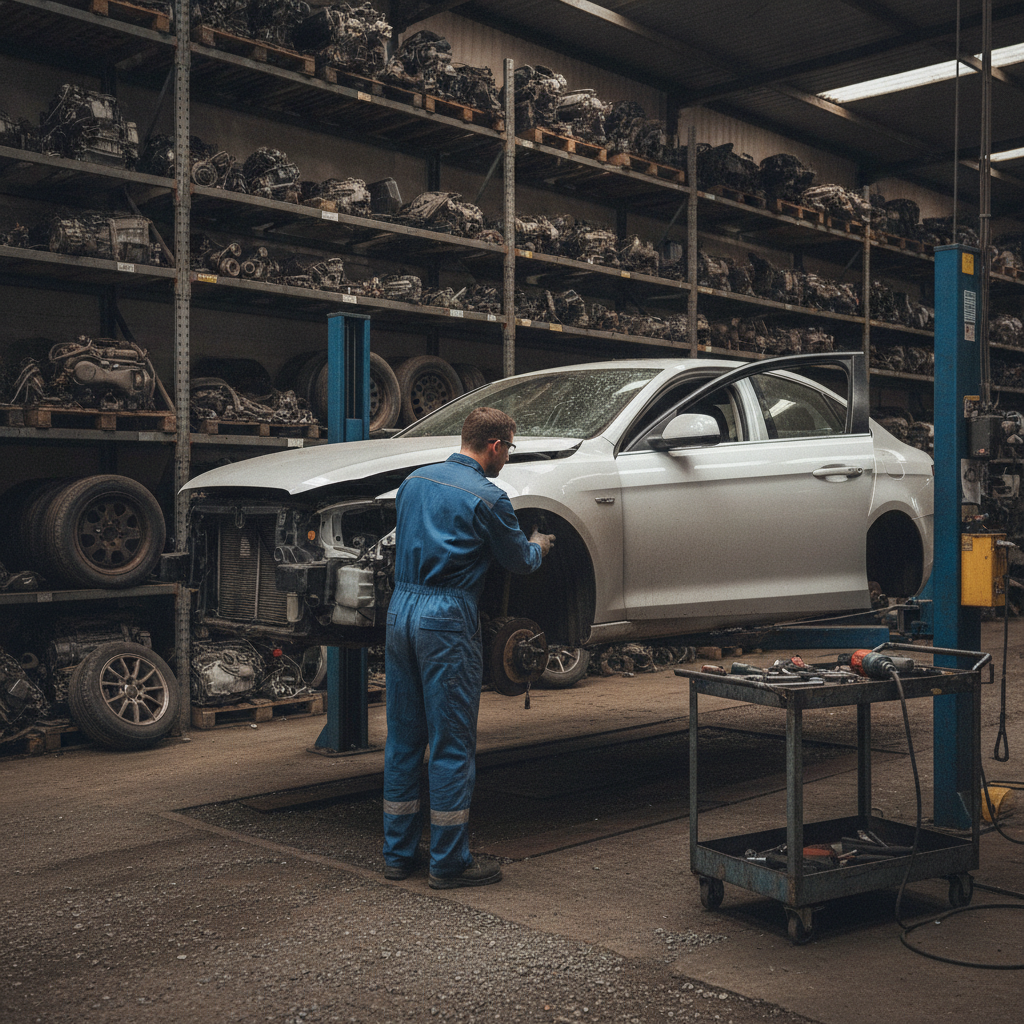
Why Used OEM Parts Beat Cheap Aftermarket Alternatives Every Time
For vehicle owners in Philadelphia, Pennsylvania, and Wilmington, Delaware, the dilemma is often the same: when a critical component fails, do you opt for a brand-new, low-cost aftermarket part or a high-quality used OEM part? While the price tag on a generic aftermarket component might look appealing at first glance, the technical reality tells a much different story. At JP Auto Hub, we see the consequences of ‘cheap’ repairs daily. This guide explores the engineering, safety, and economic reasons why recycled car parts (Original Equipment Manufacturer) are the superior choice for your vehicle.
The Engineering Gap: Precision vs. Generalization
OEM parts are designed by the same engineers who built your vehicle. Every dimension, material specification, and tolerance is calculated to work in harmony with the rest of the car’s systems. In contrast, aftermarket manufacturers often use ‘reverse engineering’ to create a part that fits multiple vehicle makes and models to maximize their profit margins.
Tolerances and Fitment
A used OEM alternator from JP Auto Hub is guaranteed to bolt on exactly as the original did. Aftermarket parts frequently suffer from ‘slop’—minor deviations in mounting points or connector shapes that force mechanics to manipulate the part to make it fit. This can lead to vibrations, premature wear, and even damage to surrounding components.
Material Quality and Longevity
Manufacturers spend millions on R&D to determine the exact alloy or polymer needed for a specific part. Cheap aftermarket alternatives often substitute high-grade materials for lower-cost variants. For example, an OEM suspension arm may use a specific forged aluminum alloy for weight and strength, while a cheap alternative might use a heavier, more brittle cast iron.
The False Economy of ‘New’ Aftermarket Parts
Many drivers in Annapolis, Maryland, and Cherry Hill, New Jersey, are lured by the word ‘new.’ However, a ‘new’ part of inferior quality is often less reliable than a used auto part that has already proven its durability over thousands of miles. This is known as the ‘Infant Mortality’ phase in reliability engineering; if an OEM part has functioned for 30,000 miles, it has passed the initial failure window and is likely to last for its full engineered lifespan.
Comparing the Real Costs
| Feature | Used OEM (JP Auto Hub) | Cheap Aftermarket |
|---|---|---|
| Fitment | 100% Guaranteed Factory Fit | Variable; often requires adjustment |
| Material Quality | High-grade, factory-spec | Lower-grade substitutes |
| Safety Testing | Rigorous crash and stress tests | Minimal or self-certified |
| Resale Value | Maintains vehicle integrity | May decrease vehicle value |
| Environmental Impact | Sustainable and recycled | High carbon footprint (new production) |
When you factor in the cost of labor, the aftermarket ‘bargain’ disappears. If a cheap water pump fails after six months, you aren’t just paying for a new part; you are paying for the labor to install it all over again. By choosing OEM parts from a trusted source, you do the job once and do it right.
Safety and Integrated Technology
Modern vehicles are complex ecosystems of sensors and modules. In areas like Cherry Hill, NJ, where traffic density is high, your vehicle’s safety systems must be flawless. Using non-OEM sensors or structural components can interfere with Crumple Zones or Advanced Driver Assistance Systems (ADAS).
The Risk of Non-Compliant Components
- Brake Rotors: Aftermarket rotors may have different heat dissipation properties, leading to brake fade during heavy use in stop-and-go Philadelphia traffic.
- Body Panels: Recycled car parts like hoods and fenders are designed to buckle in specific ways during an impact. Aftermarket panels may be too rigid or too soft, altering the vehicle’s safety profile.
- Electrical Sensors: Generic MAF (Mass Air Flow) or O2 sensors often send ‘noisy’ signals to the ECU, leading to poor fuel economy and ‘Check Engine’ lights.
Why the Mid-Atlantic Chooses JP Auto Hub
At JP Auto Hub, we serve the specific needs of drivers across Pennsylvania, Delaware, and Maryland. Our inventory of used auto parts is meticulously inspected to ensure that our customers receive components that meet or exceed factory standards. We understand that a car in Wilmington faces different challenges—such as road salt and humidity—than a car in a desert climate, and we source our inventory accordingly.
Sustainability and Environmental Responsibility
Choosing recycled car parts is the most eco-friendly way to maintain a vehicle. Manufacturing a new car part requires massive amounts of energy, raw ore mining, and global shipping. By purchasing from JP Auto Hub, you are directly reducing the carbon footprint of your repair and keeping perfectly functional machinery out of landfills.
📹 Recommended Video
For a visual guide, search “benefits of using recycled OEM auto parts vs aftermarket car parts engineering comparison” on
YouTube.
Technical Inspection: What We Look For
Every part in our inventory undergoes a multi-point inspection process. We don’t just pull parts; we evaluate them. For engines, we perform compression tests and oil analysis. For transmissions, we check fluid clarity and gear engagement. This technical rigor is why professional shops in Annapolis trust us over generic online marketplaces.
Commonly Requested Used OEM Parts
- Transmissions: Restoring factory shift logic and durability.
- Engine Assemblies: Providing a cost-effective alternative to a full vehicle replacement.
- Headlight Assemblies: Ensuring proper beam pattern and UV coating longevity.
- ECUs and Modules: Avoiding the programming headaches often found with non-OEM electronics.
Conclusion: The Smart Choice for Your Vehicle
While the allure of a low price is strong, the technical and safety advantages of OEM parts are undeniable. Whether you are performing a DIY repair in your garage in Philadelphia or managing a fleet in Wilmington, JP Auto Hub provides the high-quality, recycled car parts you need to keep your vehicle running exactly as the manufacturer intended. Don’t settle for ‘close enough’—choose the precision and reliability of genuine used auto parts.
Ready to find the perfect part for your vehicle? Browse our shop today or contact our team of experts for assistance.





Copyright 2025 © J&P All right reserved. Powered by IzyoX
